New Zealand Golf Architecture: MacKenzie and Doak’s Southern Hemisphere Gems
New Zealand is a dream destination for many golf travelers because of the variety of courses it offers. Golfers can play contoured Golden Age courses among Auckland’s native vegetation, navigate sandy coastal terrain north of the city, and take on exposed fairways running toward the cliffs above Hawke’s Bay, all in one vacation.
Renowned architects Dr. Alister MacKenzie and Tom Doak have played a significant role in shaping the country’s golf course architecture. Following his work in Australia, MacKenzie traveled to Auckland in 1927 to redesign Titirangi, his only confirmed course in New Zealand. Doak studied MacKenzie’s work before developing his own approach, shaped by extensive travel, close attention to detail, and early experience working alongside Pete Dye.
Doak’s three New Zealand designs showcase the range of his approach. Cape Kidnappers occupies elevated ridges above Hawke’s Bay, while Tara Iti and Te Arai North make use of the sandy coastal terrain north of Auckland. Throughout this piece, we’ll explore the two designers’ contributions to golf course architecture in New Zealand, along with other notable courses and the architects behind them.
Which New Zealand Golf Course Did Alister MacKenzie Design?
MacKenzie is widely regarded as one of the leading architects of golf’s Golden Age, and he brought his expertise to New Zealand in 1927. Following his design and advisory work in Australia, he traveled to Auckland to begin work on Titirangi Golf Club. He spent less than a week studying the property before producing a complete course plan, using the undulating ground, ravines and native vegetation to shape the routing. MacKenzie undertook a substantial redesign of the existing layout, retaining just five greens and creating new fairways on nine holes. Bert Cooke supervised and implemented the plan between March 1927 and October 1928.
The completed course opened in 1928 and remains MacKenzie’s only confirmed design in New Zealand. Highlights include contoured green complexes and bold bunkering that make the position and angle of each approach particularly important. The par-4 14th, aptly named Temptation, is a perfect example of the course’s strategic character. Taking on more of the dogleg from the tee can leave a shorter approach, while the safer line presents a more difficult angle into a two-tiered green that slopes away.
Who Is Tom Doak and How Did MacKenzie Influence Him?
An acclaimed American golf course architect, author, and course critic, Tom Doak has built his career around studying how the world’s most highly regarded courses make use of their natural surroundings. Following his graduation from Cornell University, he used a Dreer Award to travel throughout Britain and Ireland, studying some of the game’s most celebrated courses. Early in his career, he worked alongside Pete Dye, whose bold and unconventional designs helped shape Doak’s development as an architect.
Doak later established Renaissance Golf Design, which became known for its minimalist, site-led approach to course architecture. Rather than imposing a design through extensive earthmoving, Doak allows the natural terrain to guide the routing of each course.
MacKenzie’s work had a significant intellectual influence on Doak. He studied the architect’s designs extensively, admiring his use of natural terrain, strategic width, and alternative routes. Doak combined these principles with lessons from his travels throughout Britain and Ireland and his experience working with Pete Dye to develop an approach of his own.
What Makes Cape Kidnappers Golf Course a Tom Doak Masterpiece?
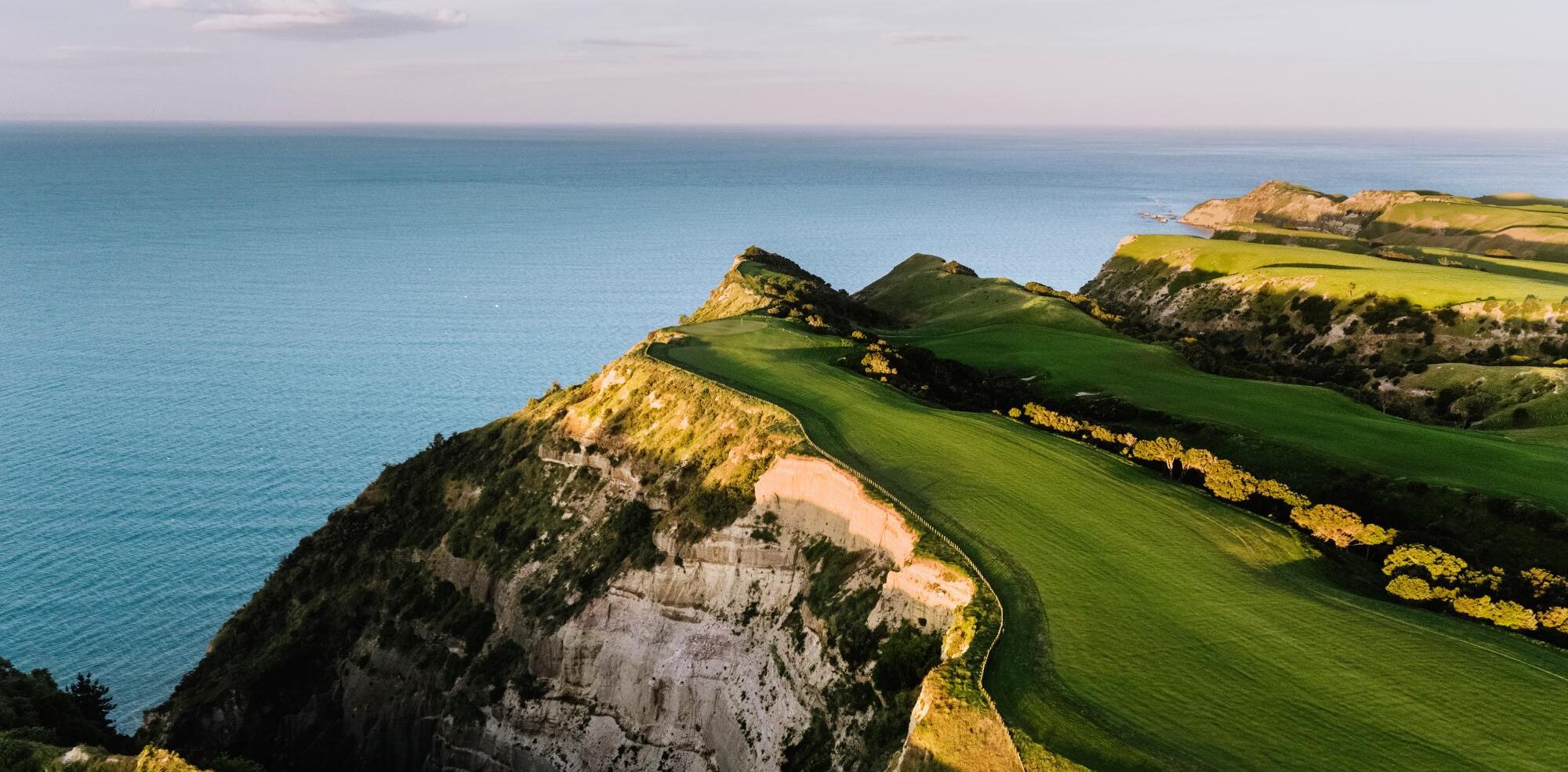
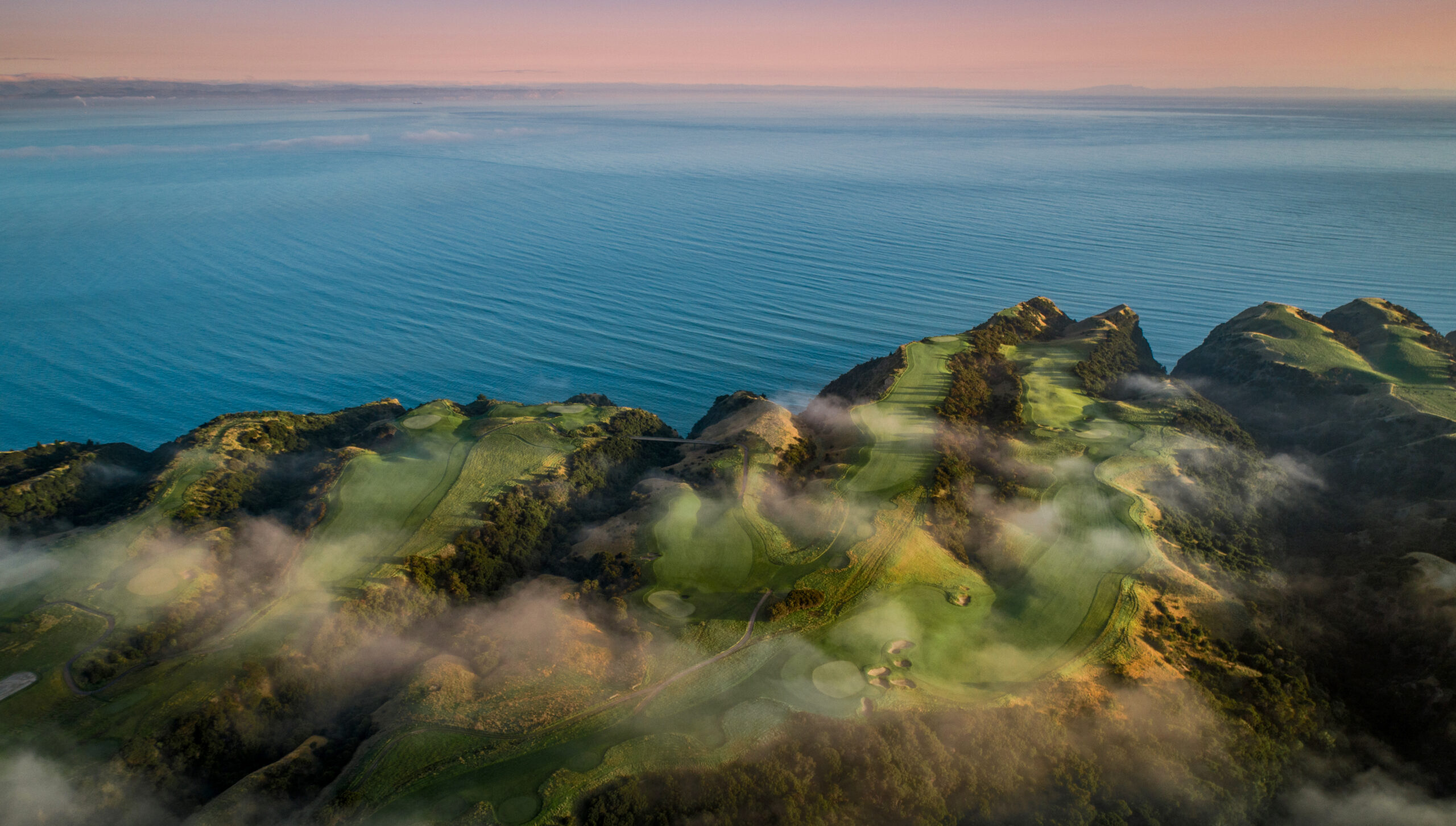
Opened in 2004, Cape Kidnappers is an 18-hole, par-71 layout designed by Tom Doak on a working sheep and cattle station in Hawke’s Bay. Measuring 7,119 yards, the course sits atop cliffs that rise approximately 140 meters above the ocean below. While the playing conditions share certain characteristics with links golf, the layout differs from a traditional links course. The land rises high above the ocean, extending toward the sea in a series of narrow ridges and deep ravines. The turf, however, remains firm and fast, with the wind playing a significant role in club selection.
Doak allowed the routing to follow the natural ridge-and-valley landscape, making the dramatic cliff edges an integral part of the golf rather than simply a backdrop. Three sections of the routing require golfers to move from the end of one ridge to another, creating dramatic changes in direction and perspective. While the fairways may appear generous, they demand thoughtful positioning, as the preferred side can significantly alter the angle into the green. Well-placed, deep bunkers add another layer of strategy, creating situations where finding the sand can sometimes be preferable to missing the green over a cliff.
Renaissance Golf Design returned in 2022 to renovate all greens and fairways, bringing the course’s continued evolution back to Doak’s original design team.
Which Other New Zealand Golf Courses Did Tom Doak Design?
Cape Kidnappers is one of three original Doak designs in New Zealand. The other two, Tara Iti Golf Club and Te Arai Links’ North Course, are neighboring but distinct projects along the North Island’s eastern coast, approximately 90 minutes north of Auckland. While all three reflect Doak’s minimalist approach, each course showcases a different interpretation of New Zealand’s natural landscape.
Tara Iti Golf Club
Tara Iti Golf Club is a private, members-only club designed by Doak and opened in 2015. The site was previously covered by a pine plantation, but following the removal of the non-native trees, sandy, undulating ground was revealed, providing the foundation for firm, fast golf.
Set among large dunes along the Hauraki Gulf, the course features sandy waste areas and fescue turf that blend naturally into the surrounding landscape. Tara Iti has no conventional bunkers, instead leaving exposed sand as part of the general playing area. This approach creates a more natural appearance, with less distinction between fairway, rough, and hazard. Changes in elevation, ground contours, and multiple angles into the greens provide variety throughout the layout. Tara Iti is a prime example of Doak’s site-led approach, where the architecture appears to emerge from the underlying sand rather than being imposed upon it.
Te Arai Links’ North Course
In response to the demand generated by Tara Iti, Doak was commissioned to design the North Course at neighboring Te Arai Links. The 18-hole, par-71 layout is walking-only, with fescue greens, tees, and fairways. The North Course begins and finishes beside the ocean but incorporates more inland golf than its counterpart, the South Course.
Doak used inland sand ridges, pine-framed terrain, and unusually shaped greens to create strategic uncertainty throughout the layout. For example, the par-5 11th features an elevated green alongside a deep “whirlpool” hazard to its right. The design rewards careful positioning and imaginative play rather than power alone.
The neighboring South Course was designed by Bill Coore and Ben Crenshaw, allowing golfers to experience contrasting architectural approaches across the same coastal landscape.
Doak’s three contributions to New Zealand golf architecture demonstrate that his style is not a fixed formula, but rather an effort to bring out the most interesting golf already suggested by the land at each site. Cape Kidnappers makes use of its elevated ridges and ravines, Tara Iti embraces exposed seaside sand, and Te Arai North incorporates inland terrain to create a distinct playing experience.
Where Does Kauri Cliffs Golf Fit into New Zealand’s Architectural Story?
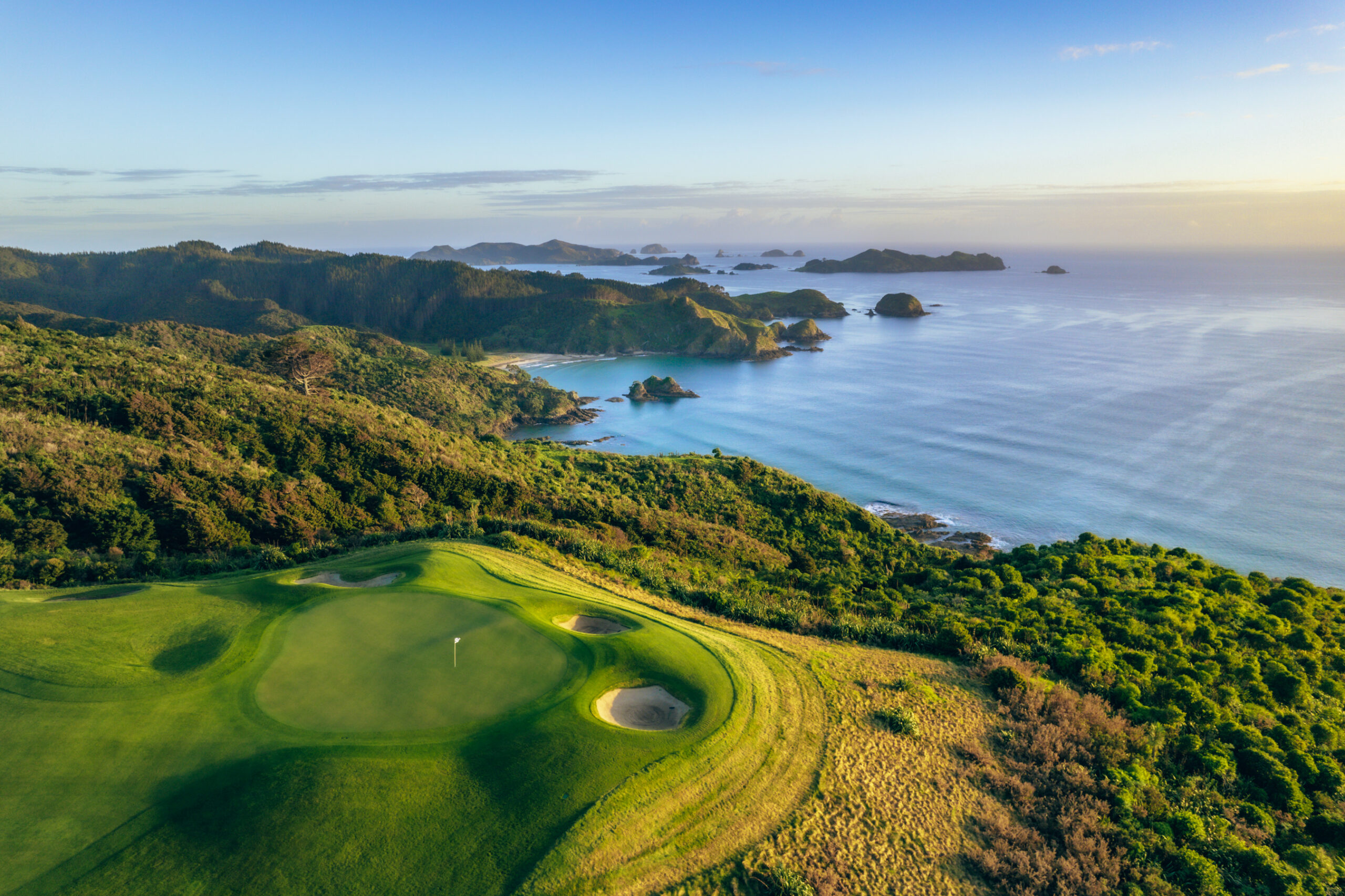
An essential part of New Zealand’s modern golf landscape, Kauri Cliffs was designed by American architect David Harman, a former associate of Jack Nicklaus. Harman’s objective was to create a world-class golf venue while preserving the character of the working farm and making the most of the property’s extensive Pacific Ocean views. The size of the property allowed him to develop a varied routing, taking golfers between inland and coastal holes.
Set near Matauri Bay in Northland, the property rolls through farmland, native vegetation, ravines, and elevated ground overlooking the Cavalli Islands. Fifteen holes offer ocean views, with several running particularly close to the cliffline. Carries over ravines and exposed greens create a different challenge from Cape Kidnappers. The two courses are often paired for their dramatic coastal settings and luxury lodge experiences, but their architectural identities reflect the distinct approaches of their respective designers.
Kauri Cliffs demonstrates that New Zealand’s modern golf reputation cannot be attributed to Doak alone. Harman’s work contributed significantly to the country’s emergence as a long-haul golf destination.
Can You Play New Zealand’s Architectural Gems on One Golf Trip?
For golfers interested in New Zealand’s architectural story, the North Island offers a compelling route through several distinct design philosophies. Beginning around Auckland, a round at Titirangi Golf Club introduces MacKenzie’s only confirmed New Zealand design, providing a foundation for understanding the Golden Age principles that would later influence architects such as Tom Doak.
Although Tara Iti is an important part of this architectural story, the private, members-only club does not currently accept outside play. Te Arai North therefore provides visiting golfers with a more accessible opportunity to experience Doak’s work along the same stretch of coastline. Continuing north to Kauri Cliffs introduces another perspective through David Harman’s routing across farmland, ravines, and dramatic Pacific Ocean views. The journey can then continue south to Hawke’s Bay for Cape Kidnappers, where Doak’s ridge-and-cliff routing provides a striking contrast to the dunes and sandy ground farther north.
Together, Titirangi, Te Arai North, Kauri Cliffs, and Cape Kidnappers form a particularly revealing architectural sequence, rather than simply a checklist of prestigious courses. Each offers a different interpretation of the land for a well-rounded New Zealand Golf Tour.
The distances between these destinations make accommodations, domestic flights, and ground transportation important considerations when planning the itinerary. Premier Golf specializes in tailored New Zealand golf itineraries, coordinating course access, luxury accommodations, and transfers around the available playing opportunities.
FAQs
Titirangi Golf Club in Auckland is the only confirmed MacKenzie-designed course in New Zealand. MacKenzie substantially redesigned an existing layout during his visit in January 1927. Bert Cooke supervised the construction work, and the completed course officially opened in October 1928.
MacKenzie and Doak belonged to different generations and never worked together. Doak studied MacKenzie’s courses and writing extensively and helped produce The Life and Work of Dr. Alister MacKenzie. MacKenzie’s interest in natural terrain and strategic choices influenced Doak, alongside Doak’s work with Pete Dye and his study of historic courses in Britain and Ireland.
Tom Doak designed Cape Kidnappers in Hawke’s Bay, Tara Iti near Mangawhai and the North Course at Te Arai Links. Each uses a different landscape – Cape Kidnappers follows elevated ridges and ravines, while Tara Iti and Te Arai North occupy sandy coastal ground north of Auckland.
Cape Kidnappers golf course was designed by American architect Tom Doak and opened in 2004. Its fairways follow a series of ridges high above Hawke’s Bay, with deep ravines, firm playing surfaces and exposed cliff edges shaping the strategy.
No. Kauri Cliffs was designed by David Harman for Julian and Josie Robertson. Doak later designed the Robertson family’s course at Cape Kidnappers. The two courses share a connection through their owners and luxury lodge settings, but they have different architects and distinct designs.
No. Tom Doak designed Te Arai’s North Course while Bill Coore and Ben Crenshaw designed the South Course. The two layouts use neighboring coastal land differently, allowing golfers to compare two distinct modern architectural approaches during the same stay.
Cape Kidnappers, Kauri Cliffs and both courses at Te Arai Links accept visitor bookings, subject to their operating arrangements and tee-time availability. Tara Iti is a private members’ club and no longer accepts outside play. Premier Golf can build an itinerary around the courses available for a traveler’s preferred dates.
Share this: