
12 of the World’s Best Links Courses: The Ultimate Bucket List
Modern golf has become a worldwide landscape. Though the game stretches the edges of the globe, its roots lie in the shores of the British Isles. There lies the home of links golf, the purest form of the game. Birthed centuries ago on land too rugged for farming, the linksland, these courses were shaped by the sea, the coastal wind, and other natural elements.
The world’s passion for golf exploded over the 19th century. As Scottish emigrants and soldiers settled, they often found themselves in terrains that possessed much of the linksland DNA. This migration led to the establishment of acclaimed links courses across the British Isles. Ireland, a destination now synonymous with rugged, rolling terrain, became home to dunes courses such as Royal County Down and Ballybunion. The influence even made its way to the Pacific Northwest of the United States, birthing Oregon’s now iconic Bandon Dunes.
To play a links course is to tap into the very soul of the sport. The experience of playing a links course is unlike any other. Its special quality lies in the wide fairways that require a dialed-in short game and constant adaptability in shot selection. This is why we created The Ultimate Bucket List: 12 must-play links courses that represent golf’s purest challenge and greatest heritage.
The 12 Best Links Golf Courses
This list is not a roll call of the most storied courses; it is the product of expert evaluation from our team of travel specialists, weighing the critical elements that separate a great coastal course from a links legend. Our selections were assessed against four core criteria:
- Historical Significance: its contributions to the sport.
- Championship Legacy: proven ability to challenge the world’s best.
- Architectural Excellence: genius of the design and natural terrain.
- Overall Playing Experience: the setting and feeling it will provide the player.
Scotland’s Legendary Links
The Old Course at St Andrews
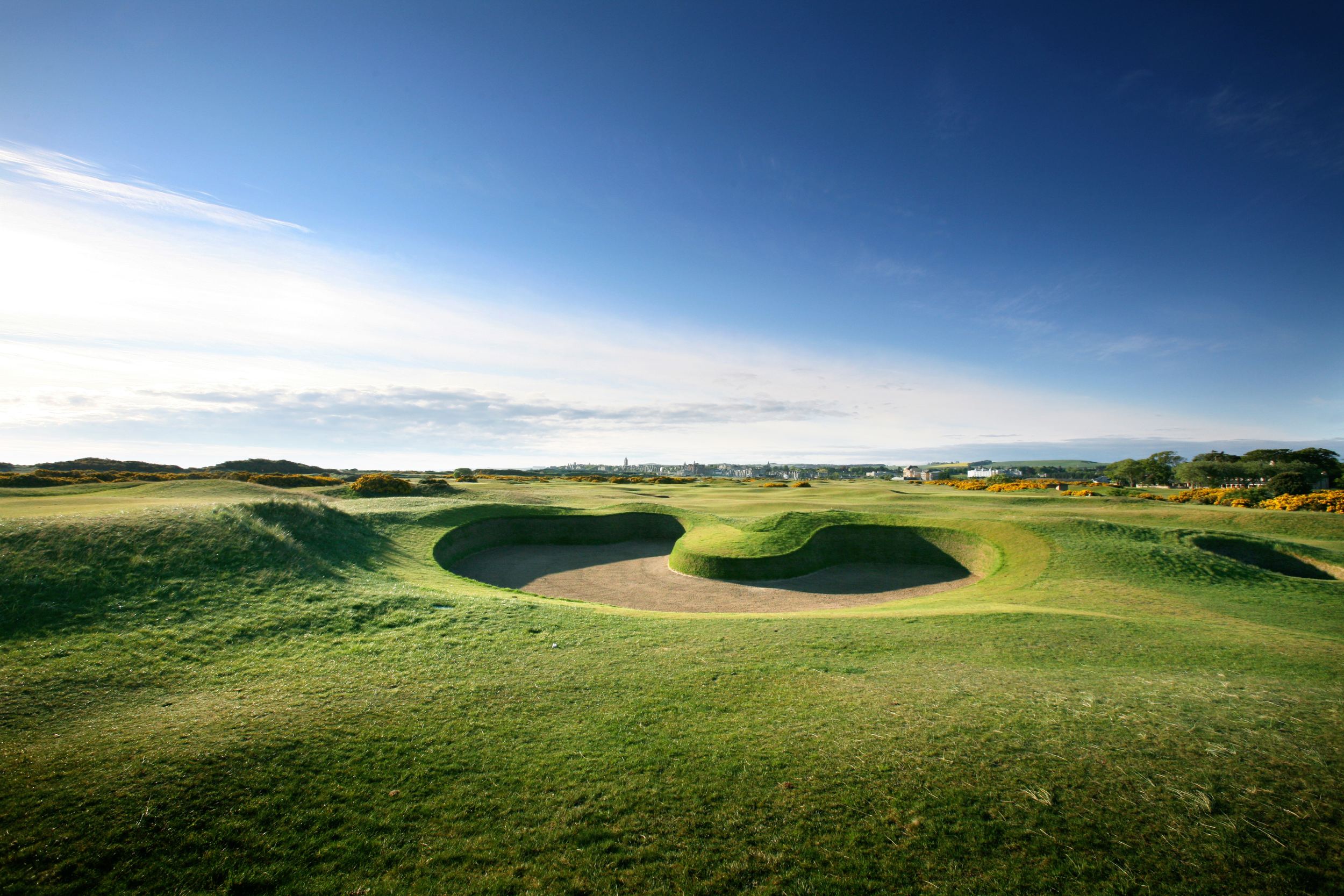
Golf has been played on these coastal edges since at least the early 15th century. The only thing larger than its age is its reputation. Its championship history and iconic features make it immediately recognisable, even to non-golfers.
The experience of playing St Andrews is defined by its history. Unlike most modern courses, the course was historically designed to be played clockwise and counterclockwise on different days. While featuring enormous double greens, faith and precision are required because many shots require you to hit over mounds and dunes without seeing your target. The classic example is the tee shot on the 14th hole (Hell Bunker), where the fairway is hidden from view. The infamous 17th Road Hole, which forces a shot over the Road Hole Bunker toward a narrow green backed by an ancient stone wall and the paved road.
For most golfers, playing this course transcends just an experience; it is a pilgrimage to walk the 18 holes, connecting directly with the birthplace and spirit of golf. The famous walk across the Swilcan Bridge and up the 18th fairway creates an emotional, unforgettable finish.
The course remains accessible to the general public through the daily ballot system. Essentially a lottery, providing an opportunity to experience this course in all its beauty.
Opened: 1400 (Standardized to 18 holes in 1764)
Par: 72
Length: 7,305 yards
Designers include: Daw Anderson, Old Tom Morris, and Mother Nature
Difficulty: Slope 132 / Rating 73.1
Royal Dornoch
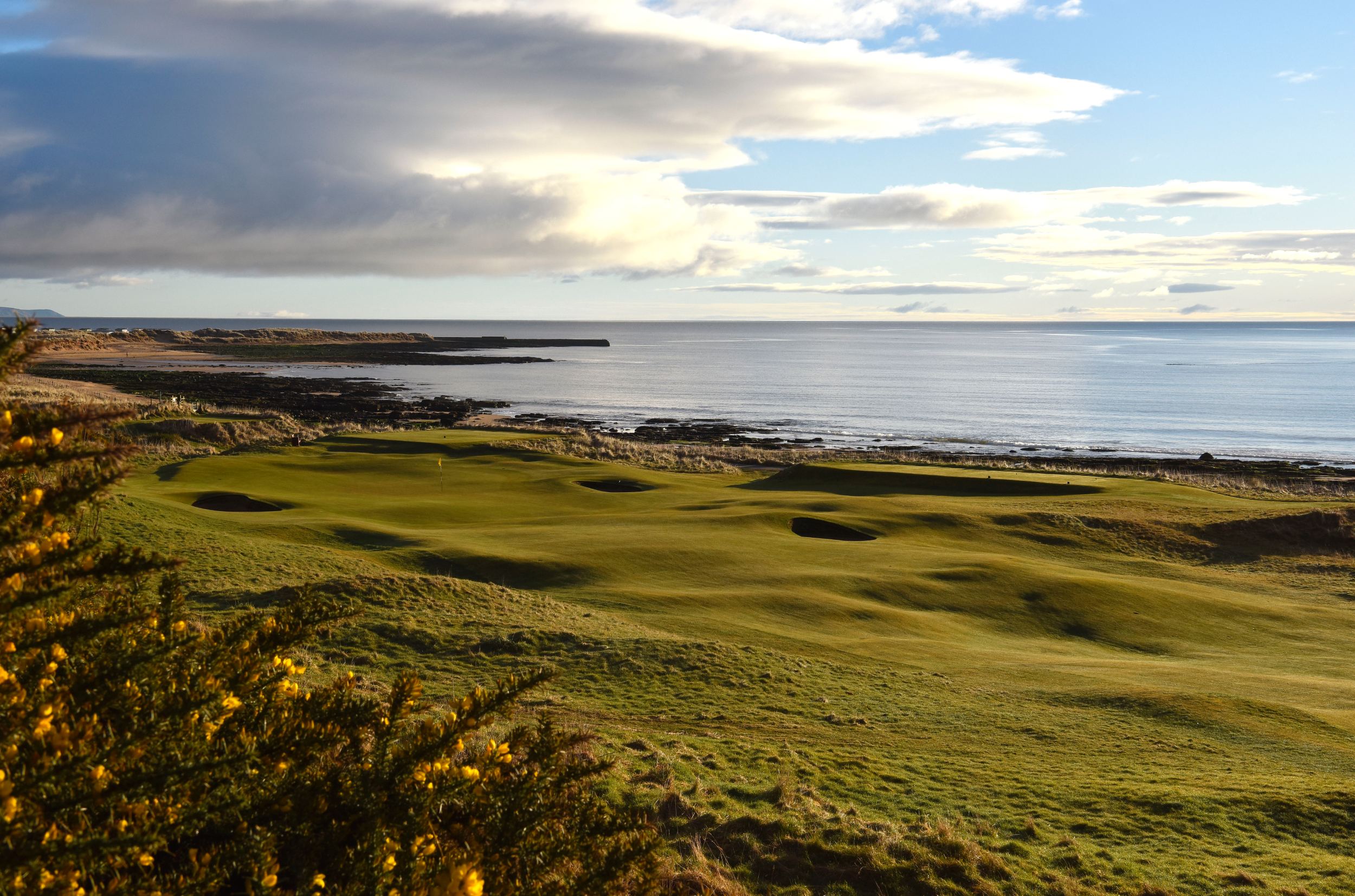
Nestled on the coast of the remote Northern Highlands of Scotland, Royal Dornoch presents a golfing experience of serene, isolated beauty. This classic links course provides the perfect setting for pure golf, a philosophy born from the course’s primary architect, Old Tom Morris, and later popularized globally by Dornoch native Donald Ross. Ross took the design’s fundamental concepts, like unique greens, and applied them to American course architecture.
Royal Dornoch is a course characterized by firm, fast conditions that demand low-running shots, particularly on signature holes like #6’s par-3 “Whinny Brae”, which features severe elevation changes and demanding green sites.
Because of its remoteness and unpretentious character, many discerning golfers consider Royal Dornoch to be the ultimate, unmissable Scottish links experience.
Opened: 1877
Par: 70
Length: 6,799 yards
Designers include: Old Tom Morris, John Sutherland, and Donald Ross
Difficulty: Slope 138 / Rating 73.5
Turnberry (Ailsa Course)
Breath-taking views define Turnberry. Spanning the Ayrshire Coast, the course offers immaculate scenes in every round. None better than the newly designed ninth hole and its dramatic coastal stretch, which now integrates the Turnberry Lighthouse. This par-3 is one of the more memorable of its kind in the world, as you tee off into the iconic landmark to round out the front nine.
The entire experience at Turnberry is elevated. Days are spent on the immaculate turf with championship-level conditioning and flawless fairways. Nights can be spent at the Turnberry Resort, a seamlessly integrated five-star accommodation with luxury dining and world-class wellness experiences.
Ailsa underwent a variety of dramatic changes over the last decade to further enhance the play. Several holes were reconfigured to play closer to the coastline, dramatically increasing visibility of the rocky cliffsides and the sea while bringing the natural elements more actively into play. This is links golf at its most luxurious.
Opened: 1901
Par: 71
Length: 7,489 yards
Designers include: Willie Fernie, Mackenzie Ross, and Martin Ebert
Difficulty: Slope 149 / Rating 77.6
Kingsbarns
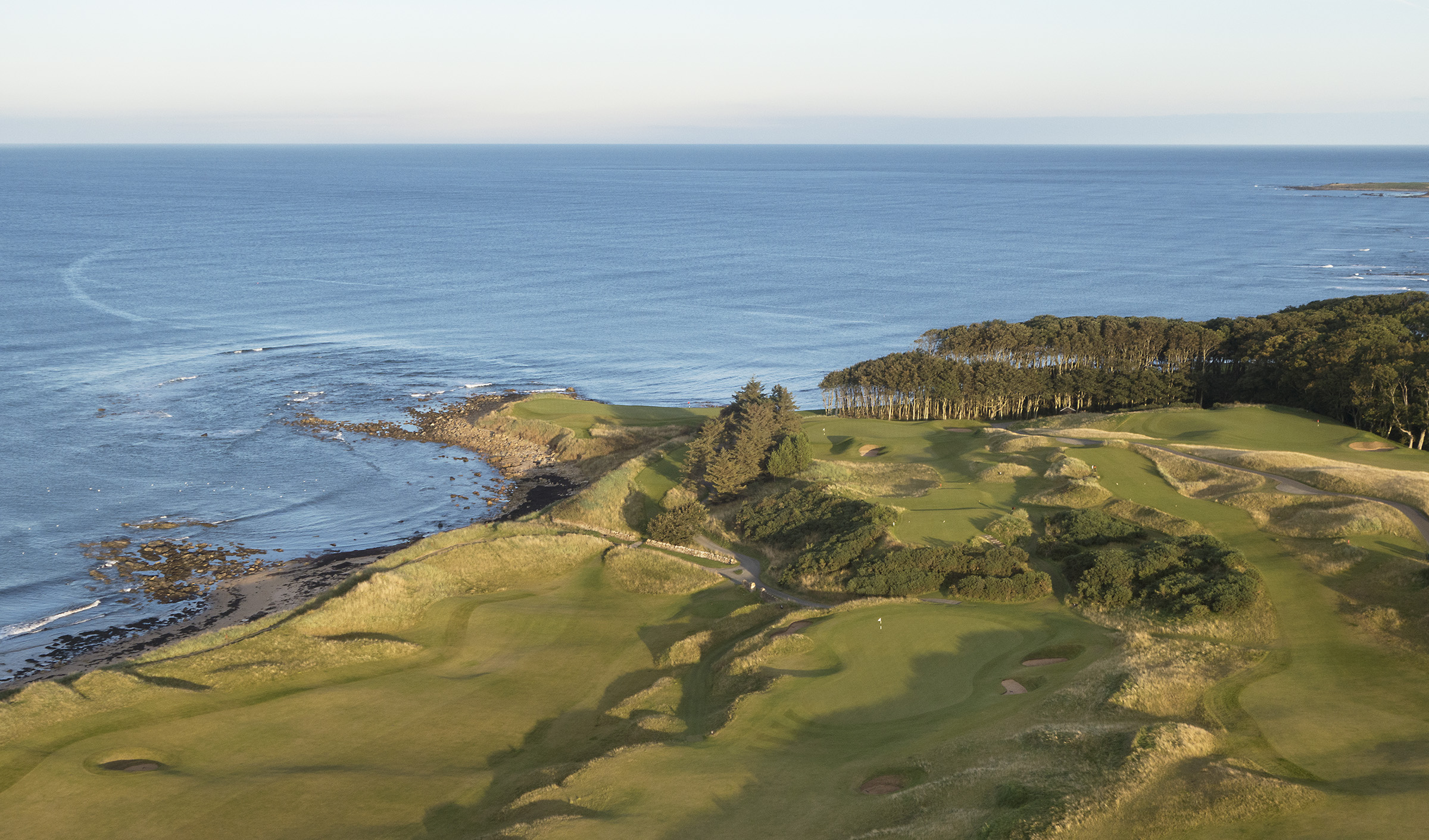
The greatest Scottish courses are typically historic courses that date back centuries— that was until Kingsbarns arrived. Opening in 2000, Kingsbarns is one of the youngest courses on our list. Yet, it has already achieved acclaimed status in the golf world.
Located just a few miles from St Andrews, the course was designed on historic land that had not seen golf in centuries. It is a true golfer-friendly course, welcoming skill levels of all kinds. Unlike its neighbors, Kingsbarns was conceived with the modern golfer in mind, featuring generous fairways and a setting that maximizes its coastal views. The sea is visible from nearly every hole.
Kingsbarns quickly earned its place among the elite by becoming a key piece of the annual Alfred Dunhill Links Championship, a prestigious DP World Tour event. The event showcases the course’s elite conditioning. This partnership immediately cemented the course’s status alongside the historic Old Course.
Architect Kyle Phillips crafted the course to offer variety and memorable shots. The course features classic links traits such as blind shots and dramatic bunkering. The curving par-5 3rd hole and the daunting, sea-guarded par-4 15th force players to calculate the risk of hugging the coastline for a better angle versus playing it safe. The always-present wind and added strategy make every round challenging but memorable.
Opened: 2000
Par: 72
Length: 7,224 yards
Designers include: Kyle Phillips and Mark Parsinen
Difficulty: Slope 141 / Rating 75.6
Royal Troon
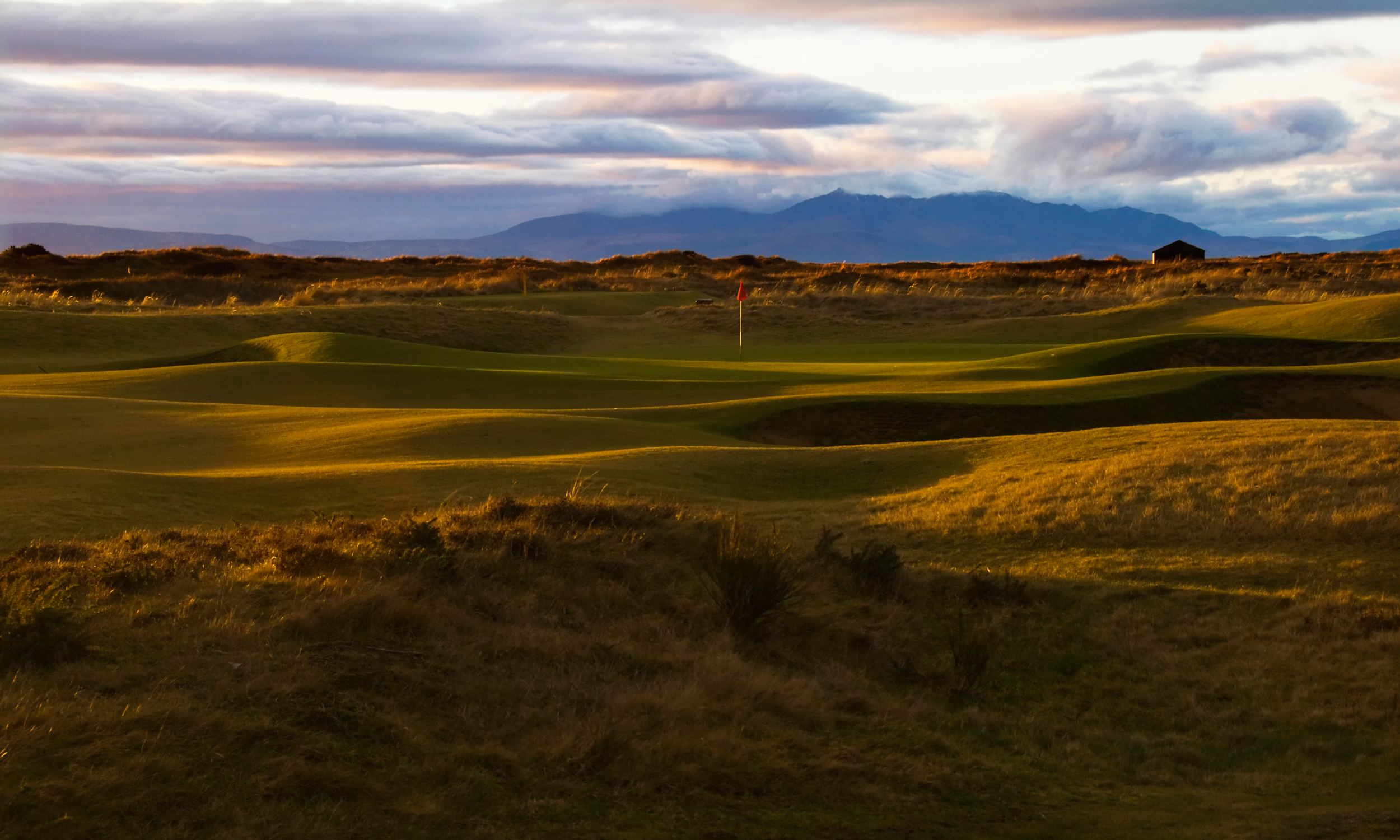
Located on the rugged Ayrshire coast, Royal Troon is a masterpiece of design. Founded in the 1800s, it received its “Royal” designation in 1978 and is celebrated as a mainstay of The Open Championship, having hosted the major ten times.
Troon features a traditional out-and-back routing. The brilliance of it lies in the reliance on the natural elements, specifically the coastal winds. The outward journey often plays with the wind at the golfer’s back, offering a chance for relatively good scoring and a bit of a false sense of confidence. Then, upon return (holes 10-18), players must face the full force of the wind, demanding longer shots and more precise control.
The 8th hole par-3 at Royal Troon, known by golfers as “The Postage Stamp,” is one of golf’s most iconic and celebrated short holes. The namesake comes from its extremely small-sized green, which is more of a sliver of turf, all while protected by five bunkers. The extremes of the course and its routing have been a central factor in its worldwide recognition and championship class.
Opened: 1878
Par: 71
Length: 7,208
Designers include: Charles Hunter, George Strath, Willie Fernie, and James Braid
Difficulty: Slope 145 / Rating 76.0
Ireland’s Premier Links Courses
Royal County Down
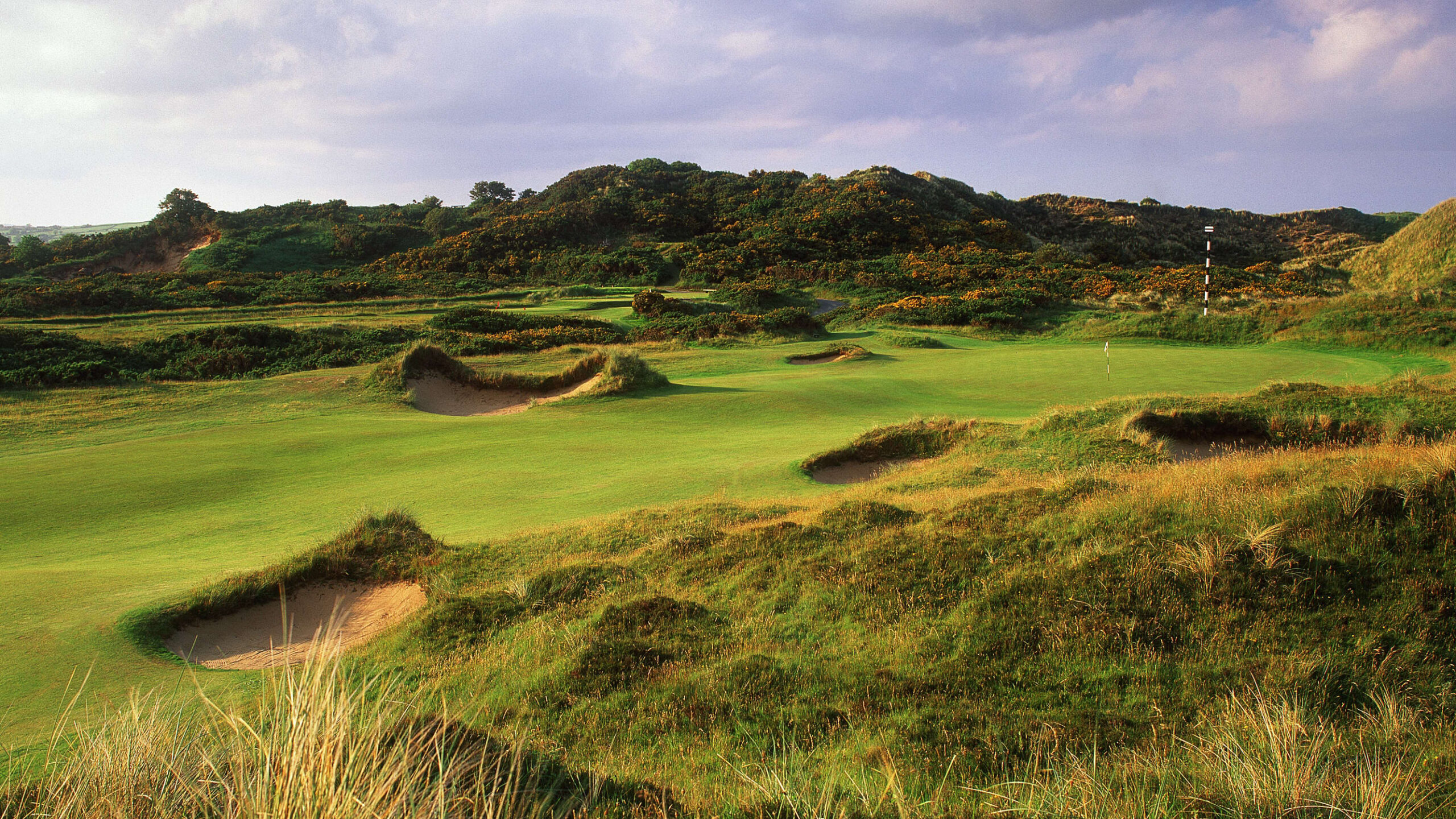
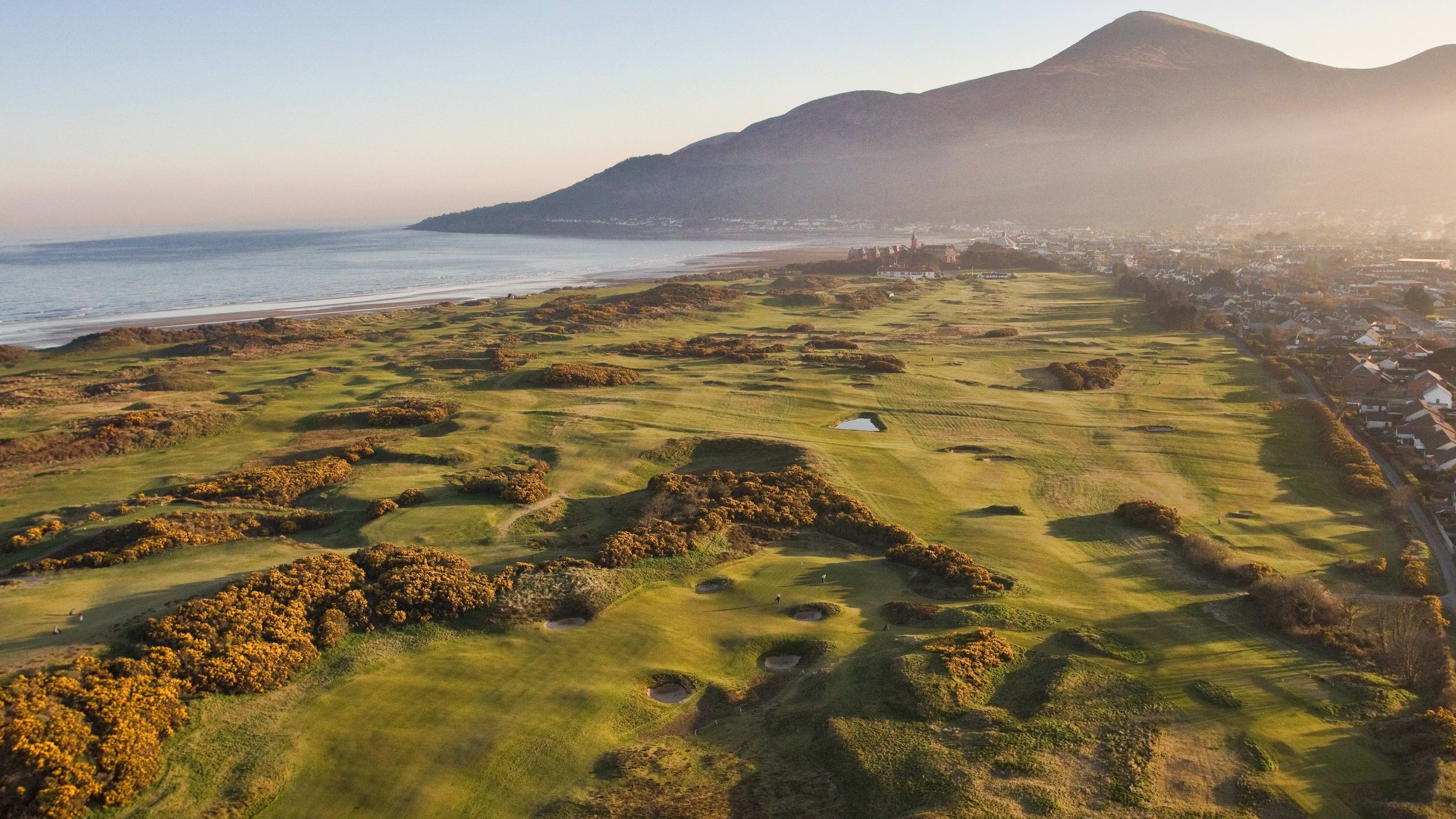
Where the mountains of Mourne meet the Irish Sea, you will find one of nature’s great creations: Royal County Down. Consistently ranked among the top courses in the world, the course is a breathtaking combination of natural beauty. The mountain landscape provides a cinematic backdrop to the round as you battle the rolling dunes of Ireland.
Be warned and don’t get too distracted by the scenery; Royal County Down requires total focus from its players. A round on this course demands faith and accuracy. On many of the tee shots, the fairway is completely hidden. To navigate the “blind” drives, directional markers are placed at the peak of the dunes. The most challenging hazards here are not the sea or sand; it is the unknown.
The front 9 is widely considered one of the finest stretches in all of links golf, with the final hole being an epic closing to the first half. Take a risk by blindly tee off over a massive ridge toward a directional marker, then reap the reward as you ascend the hill to the view of the town of Newcastle as the mountains open beneath you.
RCD is all about balance. Bold tee shots are required, but with the elements of coastal wind, ‘bearded’ bunkers, and thin fairways, good drives are not just about distance by the assist for your second shot. Here, accuracy is not a preference; it is paramount.
Opened: 1889
Par: 71
Length: 7,186
Designers include: Old Tom Morris, Harry Vardon, and Harry Colt
Difficulty: Slope 145 / Rating 75.9
Ballybunion (Old Course)
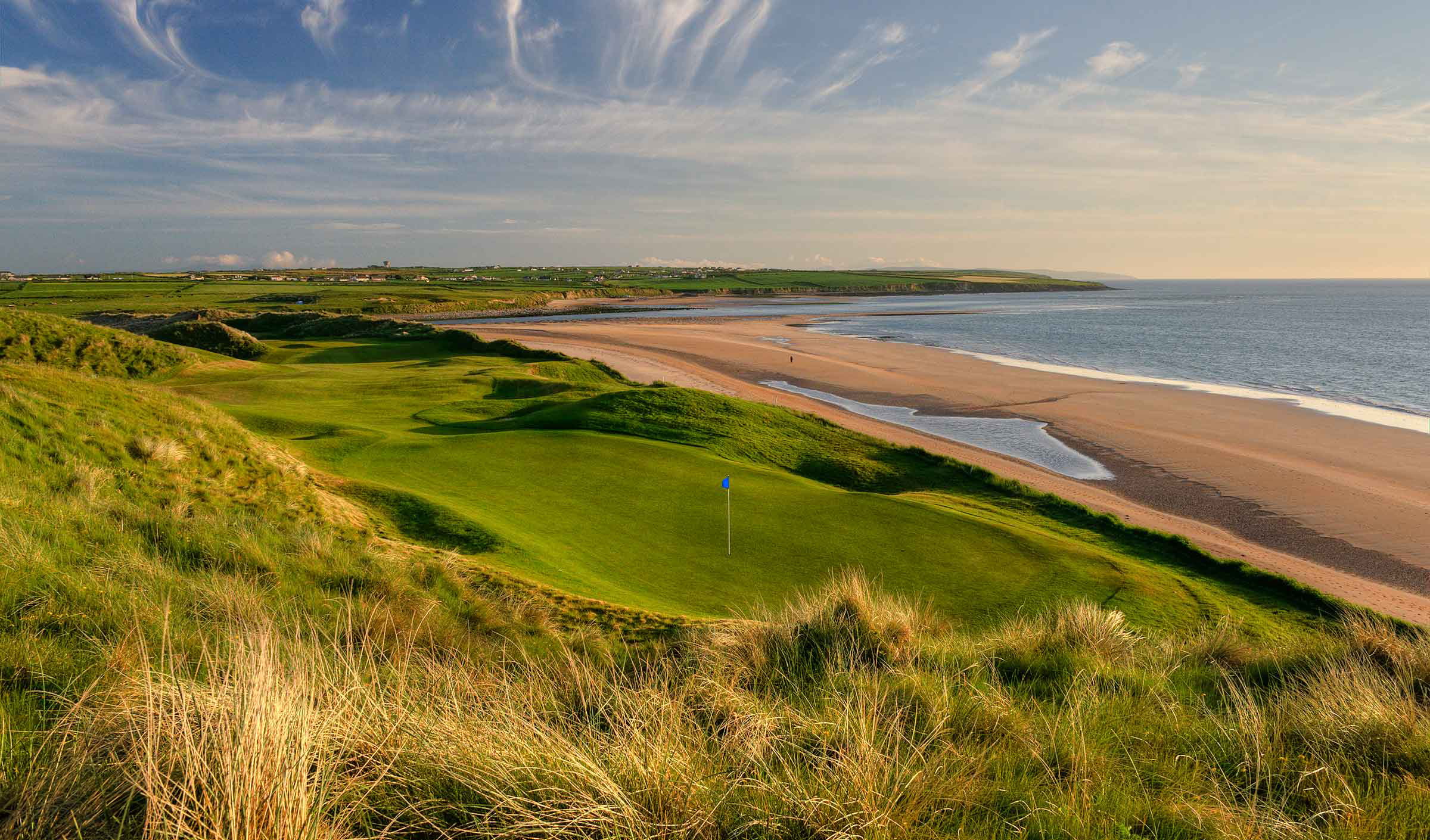
Perched on the cliffs of County Kerry, Ballybunion’s Old Course is a masterpiece sculpted by wind and waves. What defines the Old Course is the massive rolling dunes that tower over the fairways. The mountains of grass create a secluded maze filled with elevation changes.
Five-time Open Champion Tom Watson is synonymous with the story of this course. It was his influence and love for the course that brought it to a global stage. He didn’t just play the course; he was an ambassador for it. For him, this was the birthplace of golf, where the true beauty was the natural elements of the land, testing every shot in a player’s bag.
The 7th hole is often cited as the moment where Ballybunion begins to claim its spot amongst the greats. Here is the first true introduction to the Atlantic. While not the longest distance, the green, which is carved into the side of a cliff, demands precision from the tee. Anything short or right will fall victim to the Atlantic wind.
This is pure Irish golf links. With a dedication to minimalism, Ballbunion preserves the natural spirit of the game and a truly timeless experience.
Opened: 1883
Par: 71
Length: 6,802 yards
Designers include: P. Murphy, Tom Simpson, and Tom Watson (consulting)
Difficulty: Slope 131 / Rating 73.5
Lahinch
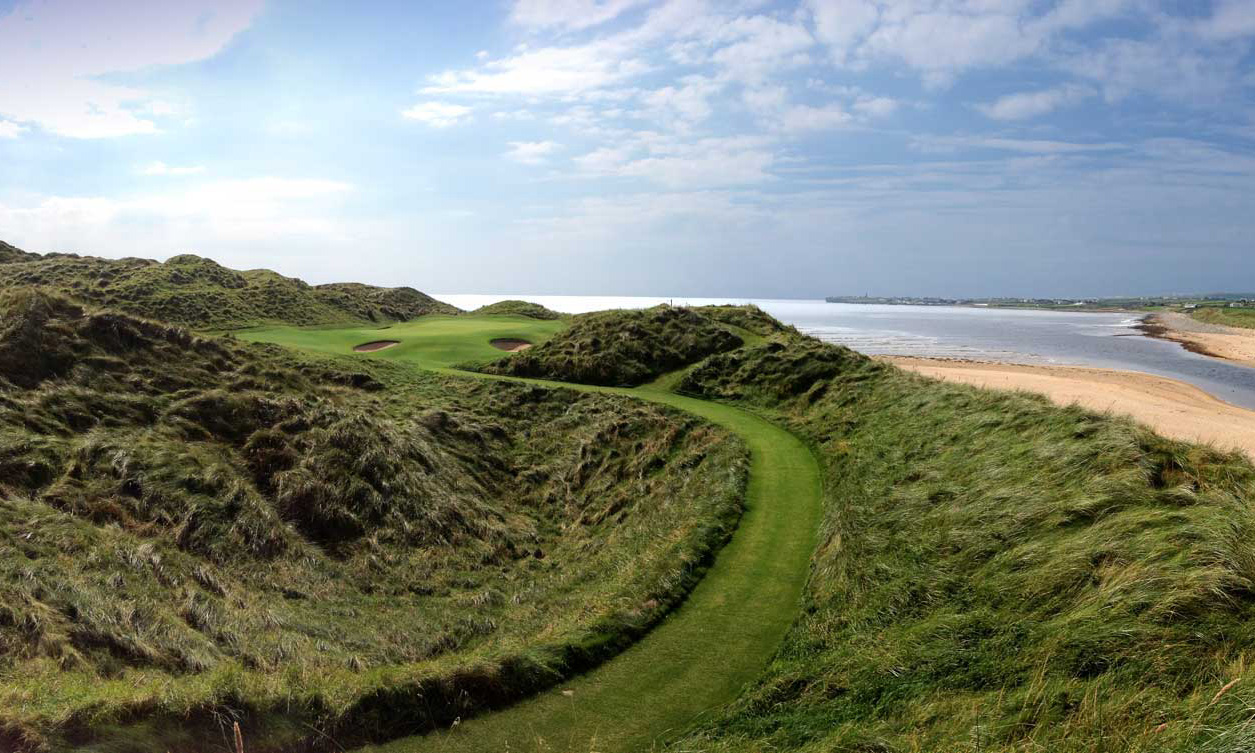
When Old Tom Morris arrived at the edge of the Atlantic, he decided to work within the confines of the dunes rather than around them. The course was later refined by Augusta National’s Alister MacKenzie. He didn’t change the greatness of the course but rediscovered it. Referred to as the “St. Andrews of Ireland, Lahinch is a blend of retro architecture and modern precision.
One of the survivors of the redesign is the 5th hole par-3, nicknamed The Dell Hole. Completely blind, tee shots are aimed at a directional rock over the grassy dune ahead. Lahinch is full of traditional quirks. The goats that roam the course are often said to be the best weathermen in the land. If they are seen congregating by the clubhouse, it is a sign to pull out your rain gear.
The modern renovations reaffirmed the natural look of the course with restorations to the bunkers and created an authentic natural design with maintenance to keep the course sustainable for generations.
Waiting off the 18th green is an atmosphere encapsulating the spirit of Irish golf. The clubhouse is a community that invites you to stay and share stories from the day’s round.
Opened: 1892
Par: 72
Length: 7,062 yards
Designers include: Old Tom Morris, Alister MacKenzie, and Martin Hawtree
Difficulty: Slope 137 / Rating 75.1
Royal Portrush (Dunluce Links)
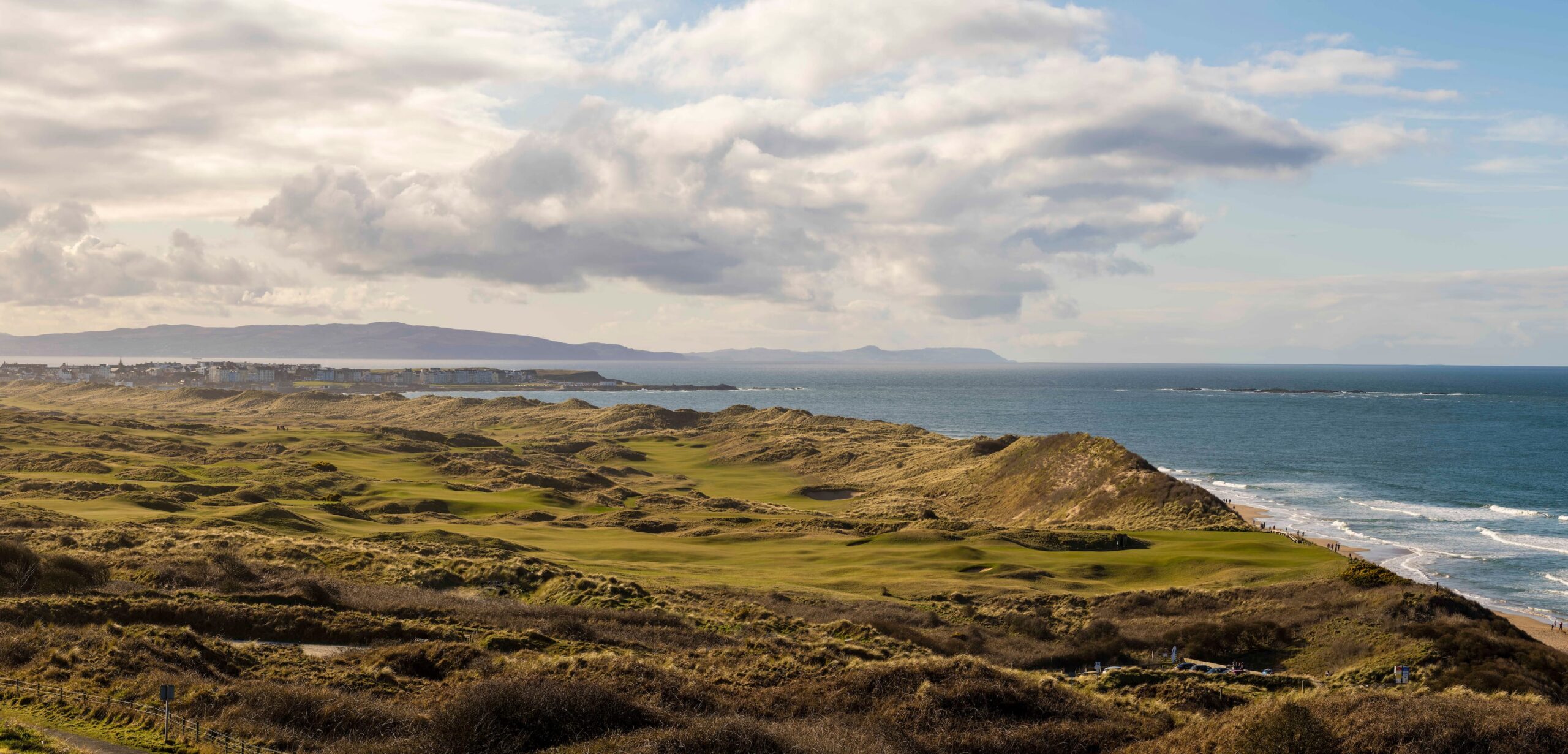
Only one course in all of Ireland has held the honor of hosting The Open Championship, that being Royal Portrush. The course is defined by its rolling dunes, which provide a contrast to the flat surface area of other Irish courses. Its landscape’s scale is nearly intimidating in size.
Portrush was not found amongst the coastal plains, but rather constructed during the Golden Age of architecture. The greens are intricate and dynamically designed with subtle breaks providing a challenging but pristine play. None more stunning than the world-renowned 5th hole, nicknamed “White Rocks”. The sharp dogleg plays toward the ocean, daring players to drive the green and risk winding up on the beach below.
Royal Portrush represents a resurgence of Irish golf. After a 68-year hiatus from the rotation, the club made a historic return as the venue for the 2019 Open Championship, where Shane Lowry famously captured the Claret Jug before a roaring home crowd.
Opened: 1888 (Current Dunluce layout finalized by Harry Colt in 1929; major modifications by Mackenzie & Ebert in 2017)
Par: 71
Length: 7,381 yards
Designers include: Harry Colt, Martin Ebert
Difficulty: Slope 140 / Rating 76.2
Links Golf Beyond the British Isles
Cape Kidnappers (New Zealand)
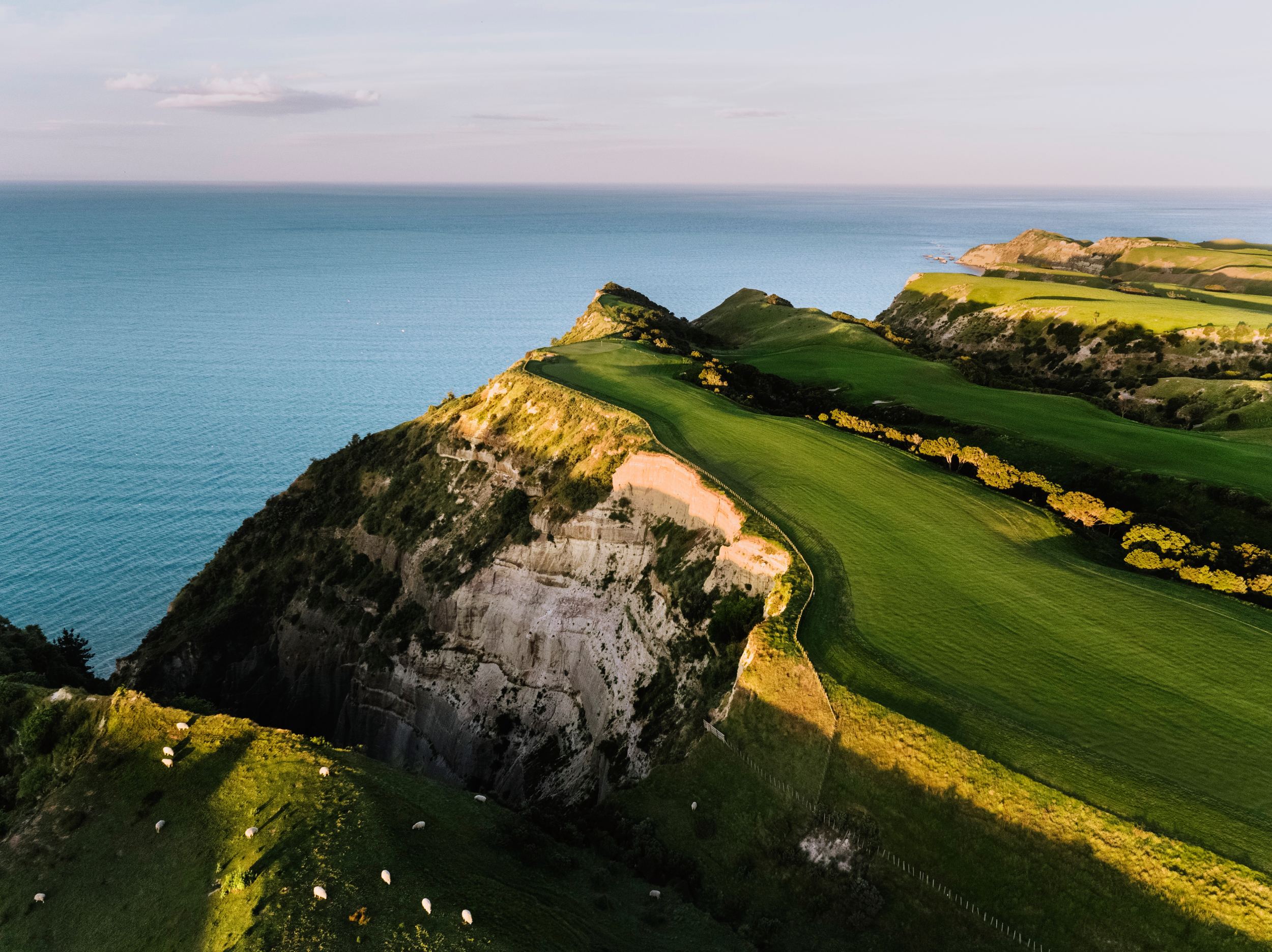
Standing 500 feet above the Pacific Ocean is New Zealand’s crown jewel of links golf: Cape Kidnappers
To bring a “links-style” soul to these grounds, American architect Tom Doak took a minimalist approach, opting to let the ancient sheep station dictate the layout. By preserving the natural “wrinkles” and tilts of the land, he created a course that demands the classic “ground game” of Scotland. This firm, fast-playing turf, combined with the absence of trees and the constant Hawke’s Bay wind, creates a hybrid of seaside links and dramatic cliffs.
The experience is by The Farm at Cape Kidnappers, an exclusive lodge offering world-class luxury amidst a pristine 6,000-acre estate. New Zealand’s temperate climate allows the course to maintain firm but fast links conditions year-round.
Golf at Cape Kidnappers is like playing at the edge of the world. Every shot is framed by the Pacific Ocean and the cascades of the Hawke’s Bay cliffs.
Opened: 2004
Par: 71
Length: 7,119 yards
Designers include: Tom Doak
Difficulty: Slope: 145 / Rating: 75.4
Barnbougle Dunes (Australia)
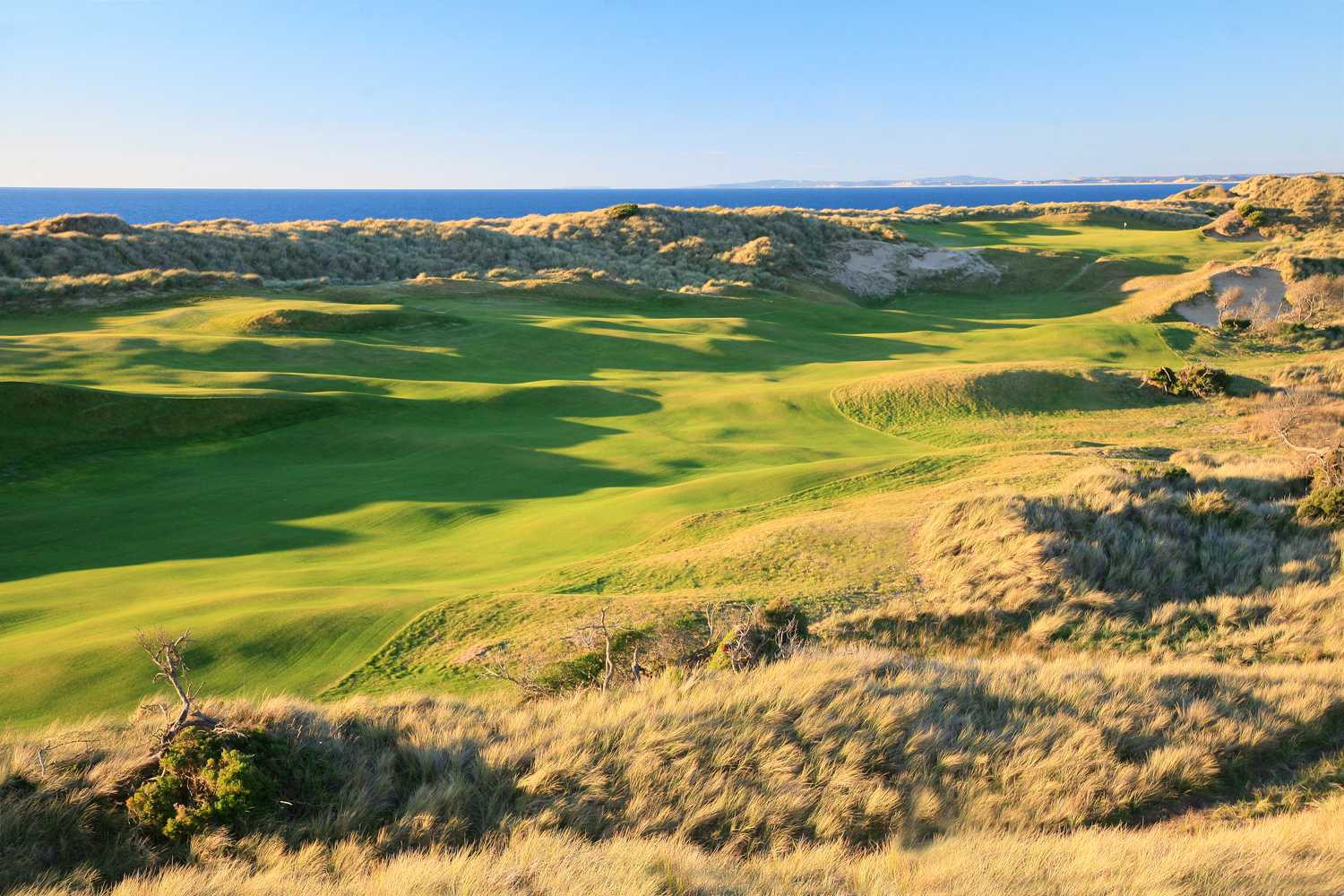
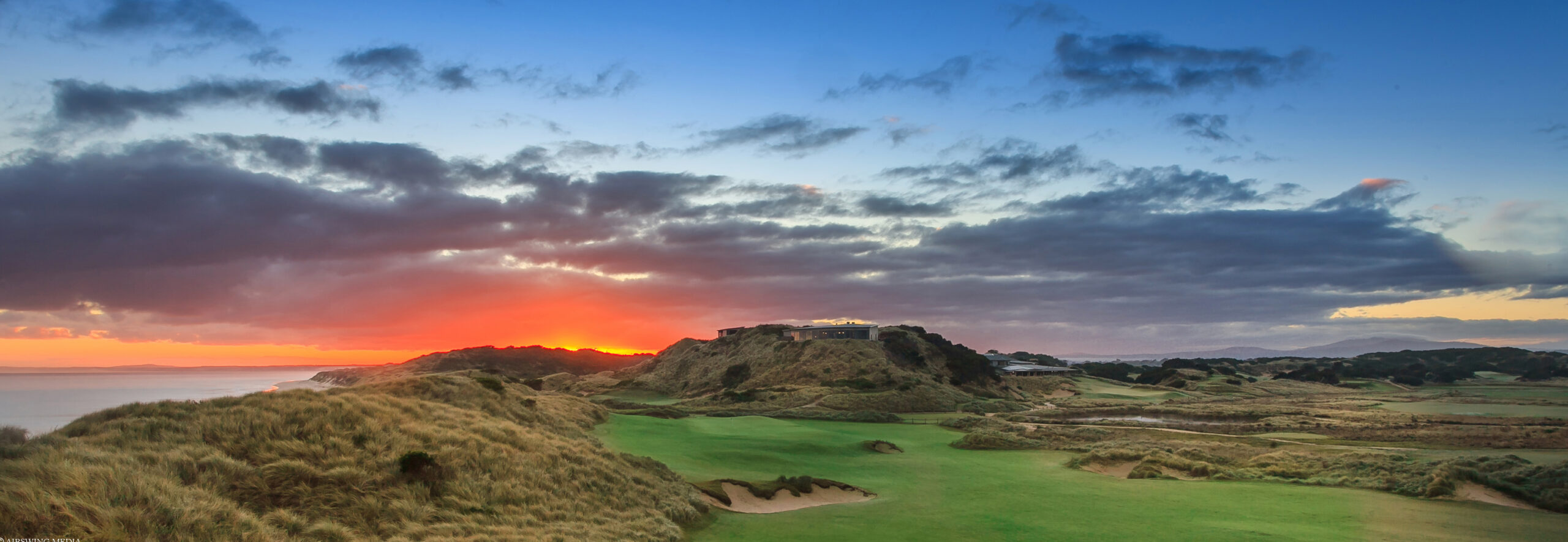
In 2004, a potato farm on Tasmania’s rugged northeast coast forever altered the trajectory of Australian golf. Barnbougle Dunes marked the end of the “links-style” imitation, introducing the country to the raw, authentic spirit of true links golf.
Barnbougle has two world-class links courses on one property, The Dunes & Lost Farm. Dunes, the original course, is the purest links course in the region. The signature moment comes on the 7th hole. Nicknamed “Tom’s Little Devil,” the par-3, mirroring Scotland’s “Postage Stamp.”
The bolder of the two courses is Coore & Crenshaw’s Lost Farm. While Dunes is about precision, Lost Farm boasts a massive scale. Including two extra par-3 (13a and 18a), the total comes to 20 holes that create a unique playing experience.
The Bass Strait terrain makes the ground a valuable, if unpredictable, ally. Thanks to the course’s signature firm turf, shots benefit from an immense run-out that can boost your total distance.
Opened: 2004
Par: 71
Length: 6,148 yards
Designers include: Tom Doak and Mike Clayton
Difficulty: Slope: 133 / Rating: 74
Bandon Dunes (USA)
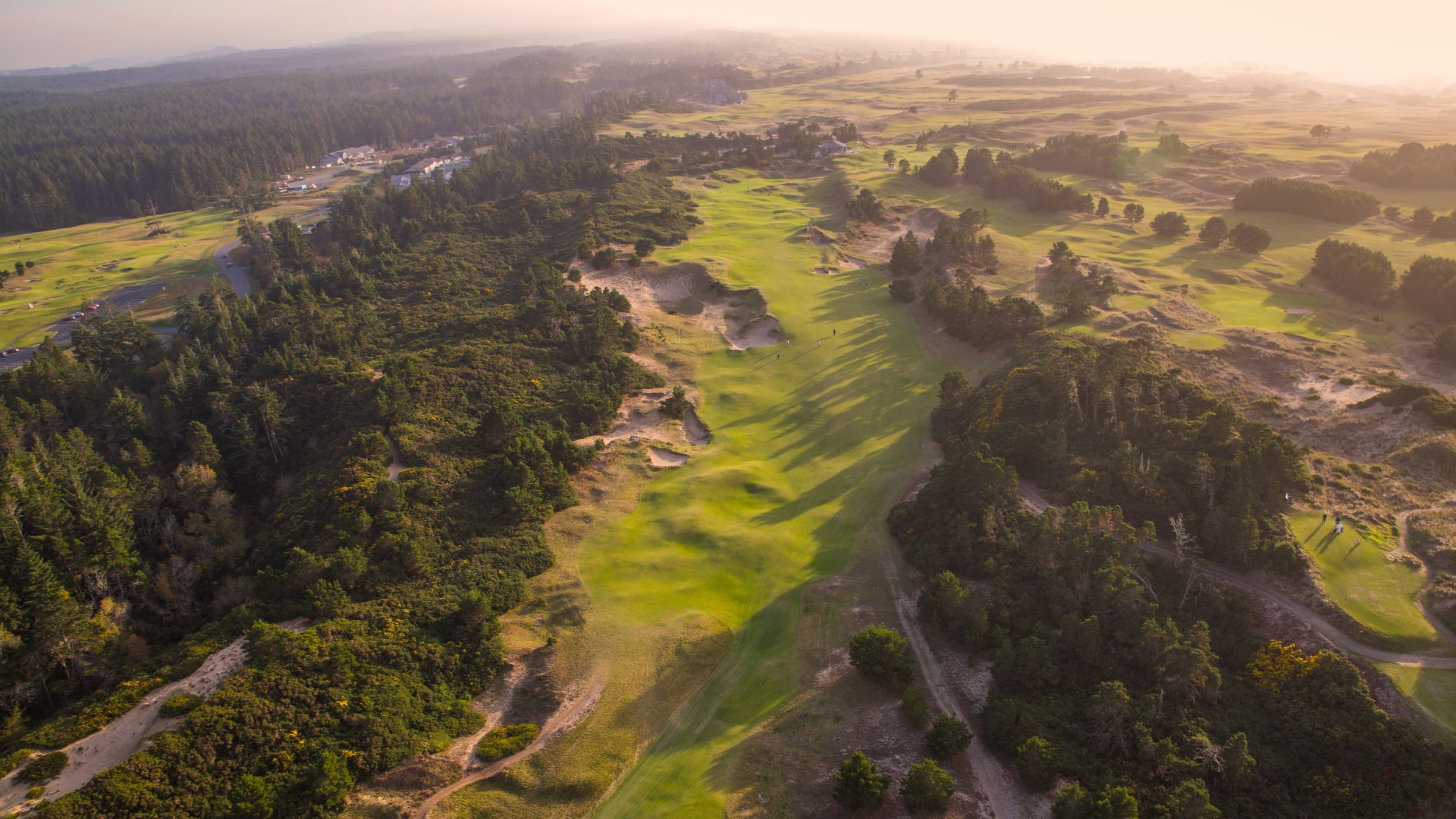
In the United States, the conversation of links golf begins and ends with Bandon Dunes. Born from Mike Keiser’s vision, the resort introduced authentic links play to a nation dominated by manicured parkland courses and golf cart culture. His risk to build a full links course across Oregon’s Pacific coast has become an instant hit for domestic travelers, exploding during 2020.
Today, Bandon is a true golfer’s haven, home to five full-sized masterpieces and two world-class short courses. Pacific Dunes serves as the premier course of the resort, featuring a dramatic ‘moment of reveal’ where the Pacific Ocean first comes into sight. At times, the scenery is nearly indistinguishable from a course in the British Isles.
Bandon became the basis for links golf in new realms. It remains a sanctuary for a golf purist: there are no carts to be found, only the timeless experience of players and caddies walking the land.
Opened: 1999
Par: 72
Length: 6,733 yards
Designers include: David McLay Kidd
Difficulty: Slope: 143 / Rating: 74.1
The Definition and Origins of a Links Golf
What Makes a Course a True Links?
While a coastal location is the most famous trait of a links course, it isn’t the only requirement. For a course to be considered a “true links,” it must possess specific geological and architectural characteristics.
- Coastal Location: Links land is a unique geological “middle ground” formed over thousands of years as shorelines behind wind-blown sand deposits, creating a rugged buffer of nutritious soil that sits between the beach and the fertile, arable farmland further inland.
- Natural Terrain: The natural use of the land is integral to links courses, allowing the existing hollows and swales to dictate the fairways.
- Sandy Soil & Firm Turf: The sand acts as a natural filtration system, instantly shedding moisture to maintain the “firm and fast” surface tension required for the ball to skip and roll across the turf.
- Exposed to Elements: Being exposed to elements is part of the Links Golf experience. Wind, rain, and unpredictable weather turn every hole into a strategic puzzle to solve.
- Minimal Trees: The salty terrain is not habitable for many trees, giving golfers maximum exposure to the elements.
- Natural Hazards: Strategy is woven into the course through sod-walled pot bunkers and thickets of gorse and heather. Elevation changes across the dunes force players to recalibrate their club selection and trajectory constantly.
- Ground Game Strategy: On Links courses, the high-lofted wedge is often traded for the bump-and-run. When in doubt, use a Texas wedge as well.
Planning Your Links Golf Bucket List
Choosing the right time for your bucket-list golf trip is a balance. While the Peak Season (May-September) offers the ultimate experience with the best conditioning and up to 18 hours of daylight in the Northern Hemisphere, savvy travelers often look for the hidden value. The Spring Advantage (April-May) provides a unique opportunity to play with significantly fewer crowds and lower rates. The Autumn Alternative (September-October) is a preference for many travelers, because of the stable weather, reduced demand, and the spectacular sunshine that turns late rounds into
When planning your global calendar, remember that geography dictates the schedule. For those heading to the Southern Hemisphere, peak season flips to November-March. However, be cautious of Winter Considerations in Scotland and Ireland. Many courses close for maintenance or require the use of fairway mats to protect the dormant grass.
Experience Links Golf with Premier Golf
For the dedicated golfer, a trip to the links is more than just a round; it is a pilgrimage. It is a journey to the sport’s roots and a rite of passage for playing the world’s greats.
Navigating the nuances of a link’s trip can be challenging. From securing coveted tee times at the Old Course to arranging seamless transport to these hidden gems, it requires more than directions. With decades of experience and full-time offices in both Scotland and Ireland, Premier Golf provides the deep local expertise needed to craft an itinerary to let you begin to check these courses off your bucket list.
Links Golf FAQs
A links golf course is built on coastal land shaped naturally by wind and sea. With sandy soil, few trees, pot bunkers, and fast-running turf, links golf rewards creativity and ground-game strategy. It’s the purest way to experience the game where it began.
Scotland is the birthplace of links golf and home to the world’s most iconic venues, including St Andrews and Royal Dornoch. Ireland follows closely with showstoppers such as Royal County Down and Ballybunion. Both offer world-class depth and authenticity.
Links golf is pure, natural, and delightfully unpredictable. Ocean winds, rolling dunes, and firm turf demand strategy over power. Every bounce is earned, inviting golfers to use imagination, embrace the elements, and connect with the game’s roots.
Unlike parkland courses with tree-lined fairways and lush turf, links courses sit on windy coastal terrain with firm sand-based ground. Golfers often play low-trajectory and bump-and-run shots, adapting to natural contours and ever-changing weather, making every round unique.
The Old Course at St Andrews, Royal Dornoch, Royal County Down, Cape Kidnappers, and Bandon Dunes regularly top global rankings. Together, they blend history, dramatic coastal beauty, and unforgettable shot-making challenges.
Links courses can be challenging: wind, firm ground, and rugged bunkers keep golfers thinking. But they’re not built to punish. With smart strategy and low-running shots, players of many abilities can enjoy the experience.
Share this: