
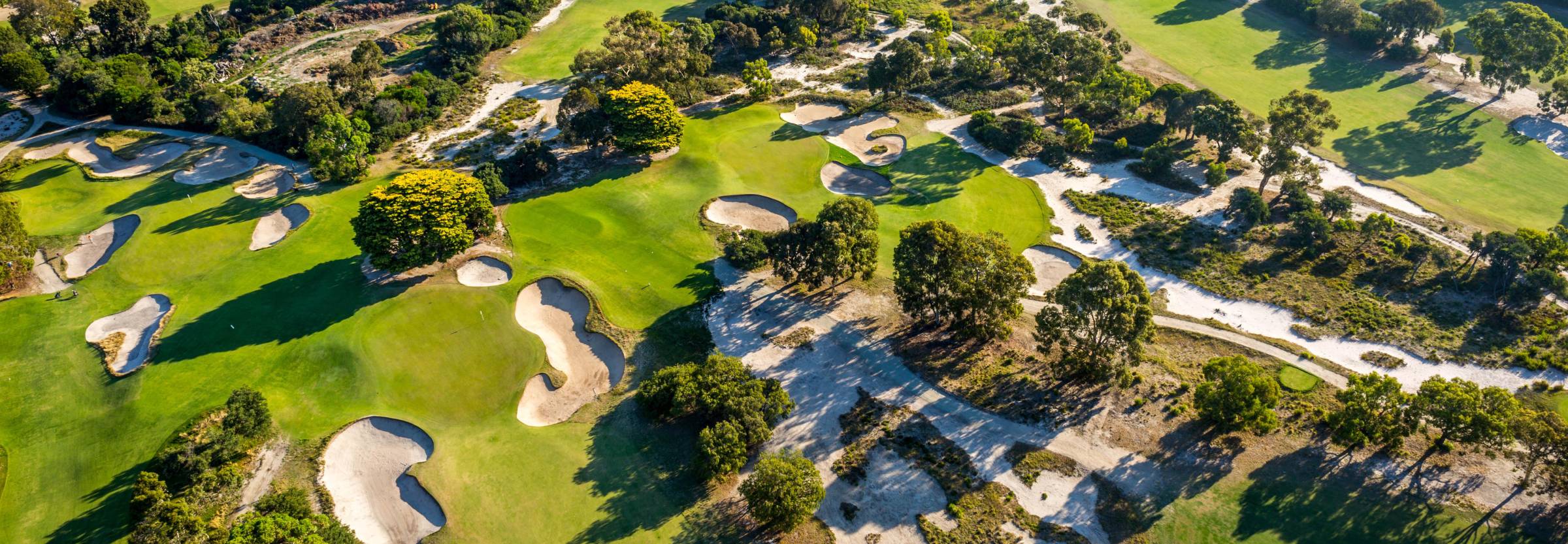
The Sandbelt, Explained: Royal Melbourne to Kingston Heath in One Seamless Trip
The Melbourne Sandbelt in Australia is one of the most concentrated collections of championship golf courses on earth.
South of the city, a stretch of ancient sand dunes underpins a group of clubs that serious golfers place alongside East Lothian, the Monterey Peninsula, and the west coast of Ireland. The difference is that far fewer people have actually played them, but that’s changing.
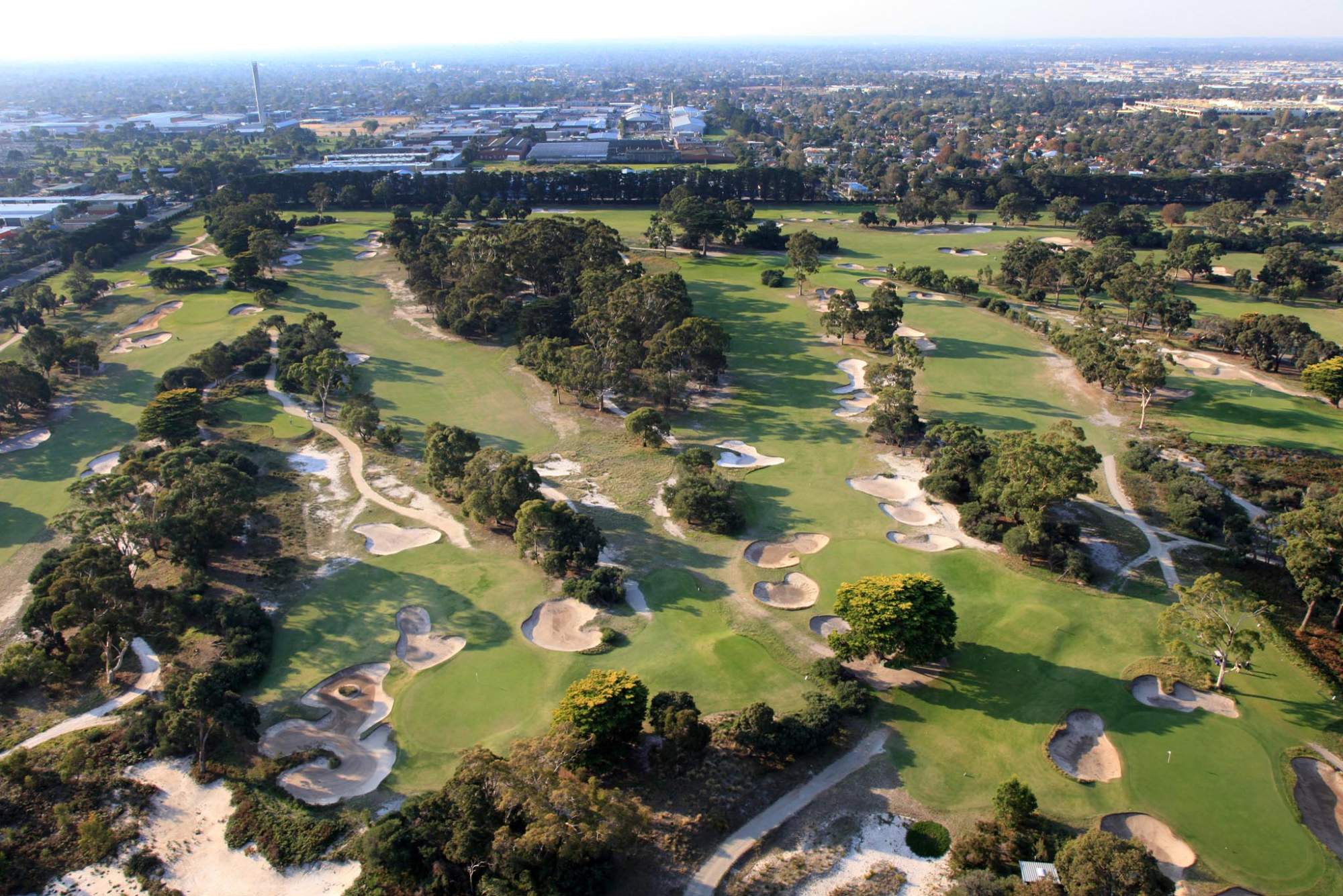
Royal Melbourne, Kingston Heath, Victoria, Metropolitan, and Yarra Yarra all sit within a 10-kilometer radius of each other, and no course is more than 35 minutes from Melbourne’s city center. A Melbourne Sandbelt golf trip is not a road trip – it’s a neighborhood crawl between some of the world’s finest courses.
In this guide, we explain what makes the Sandbelt unique, highlight its marquee courses, and show you how to build a seamless multi-day trip that pairs world-class golf with Melbourne’s vibrant culture.
What makes the Sandbelt special
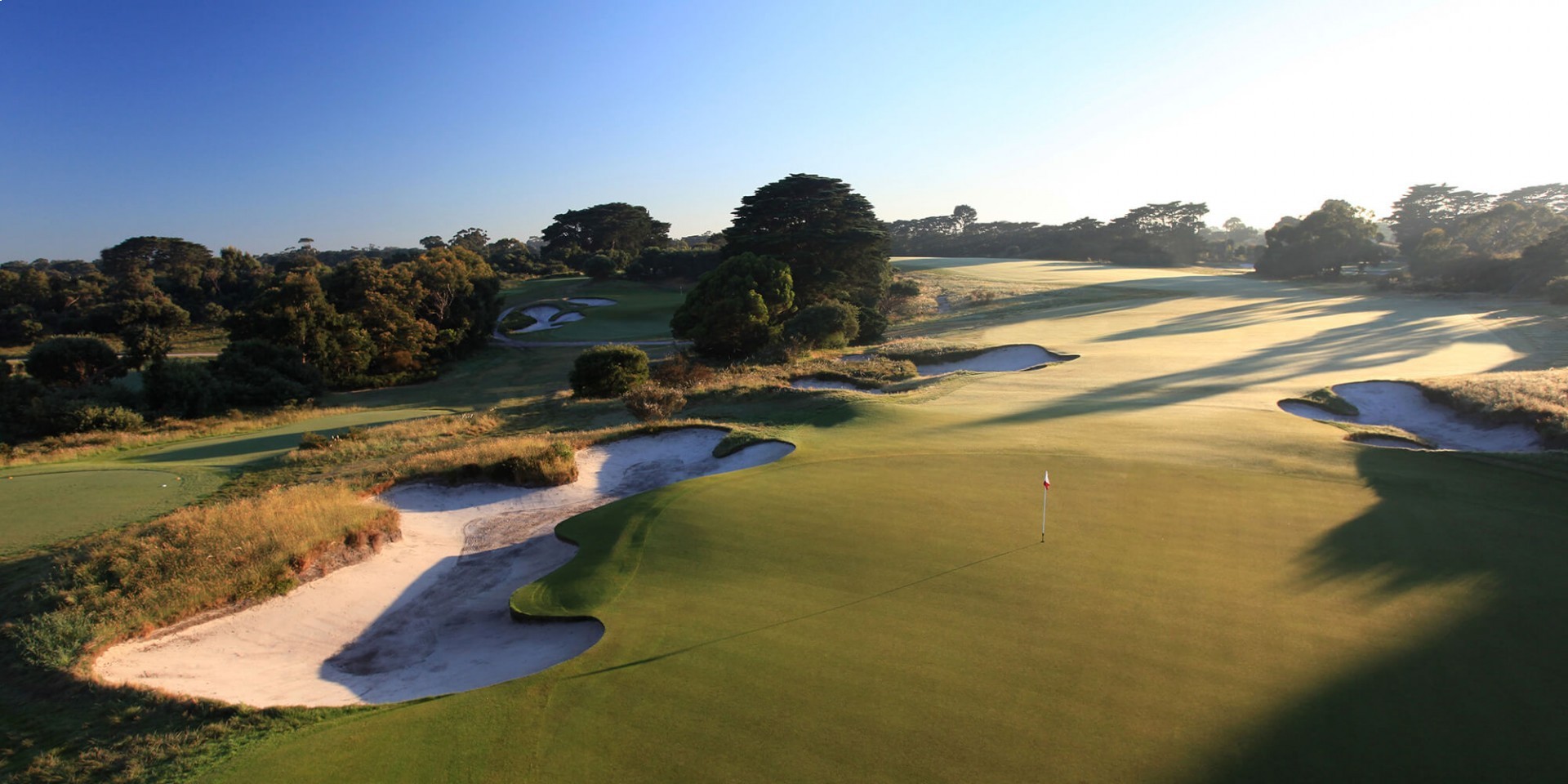
It starts with the soil. Sandy subsoil underpins the region, producing firm, fast fairways and excellent drainage. Unlike lush parkland courses, the Sandbelt encourages low-running shots and creative approaches. The ball behaves differently here. It skips and runs rather than stopping where it lands, which changes how you think about every approach.
Much of the Sandbelt’s character traces back to Dr. Alister MacKenzie. He had just completed Cypress Point in California before visiting Melbourne, and it was here that he grasped what this terrain could do.
His influence survives in wide fairways, bold green complexes, and bunkers positioned at angles that punish a specific mistake rather than simply occupying space. The result is golf that asks you to think before you swing. Birdies here come from angles, not length.
Add a century of championship history – Australian Opens, Presidents Cups, World Cups – and you have a region that has earned, not inherited, its place among the world’s great golf destinations.
The top Sandbelt golf courses in Australia
These are the Sandbelt golf courses Australia-bound visitors put at the top of every list. Each plays differently, despite sharing the same sandy soil, which is precisely what makes the region worth a dedicated trip.
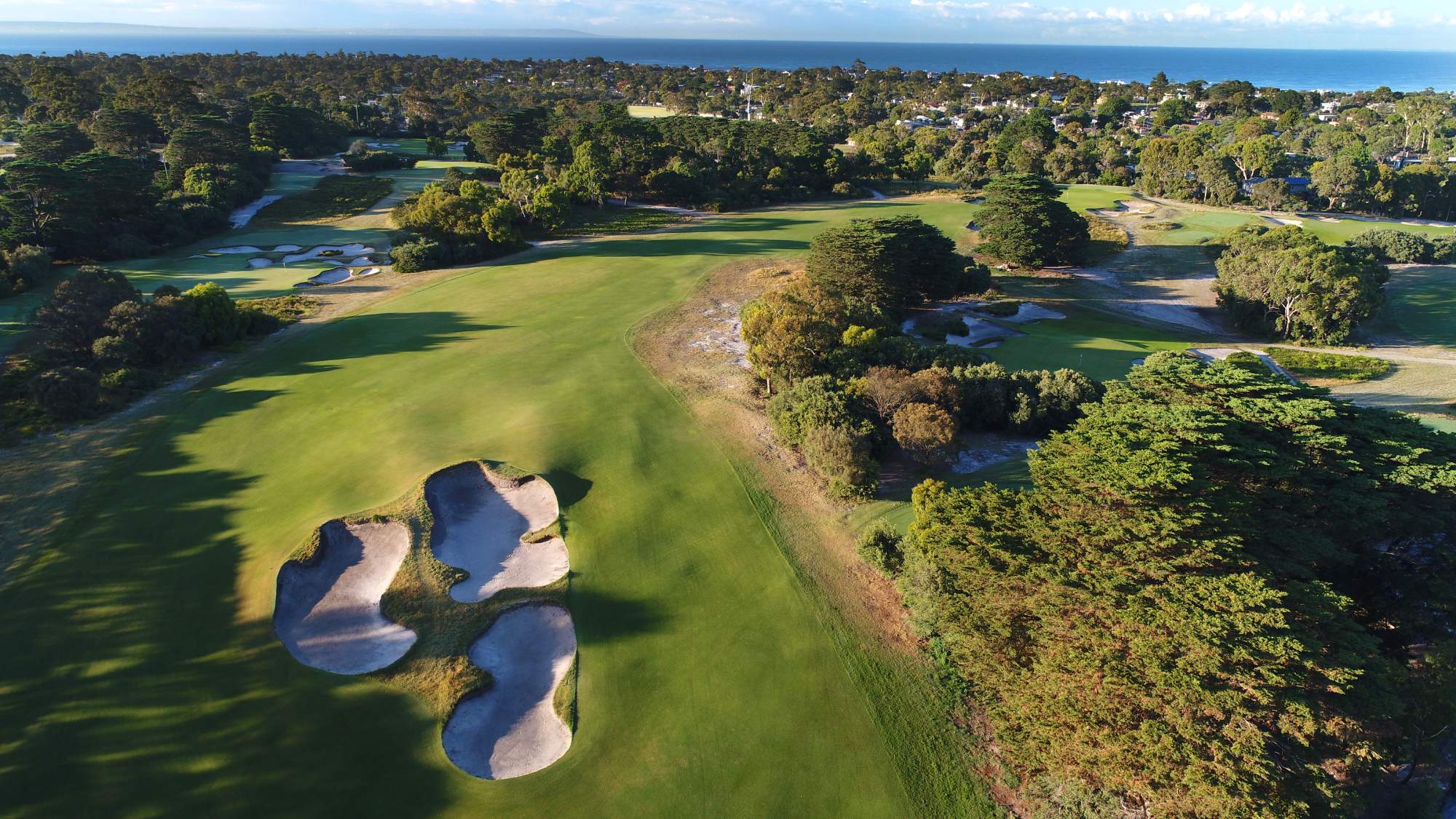
Royal Melbourne Golf Club (East & West)
Designer: Alister MacKenzie (West, 1931) and Alex Russell (East, 1932)
Royal Melbourne is where Melbourne golf trip planning begins for most visiting golfers. The West Course is MacKenzie’s finest work in Australia and one of the best courses in the world. The layout is built on the principle that the correct angle of attack is more important than distance. Stand on the wrong side of a fairway here, and the pin can disappear behind a bunker that wasn’t visible from the tee.
The East Course, designed by Russell after MacKenzie left for America, is shorter and less severe but no less demanding around the greens. For Presidents Cup events, a Composite Course draws 12 holes from the West and six from the East – a combination that Golf Digest once ranked sixth in the world outside the United States.
Royal Melbourne is also one of the world’s most sustainable clubs, leaning on native vegetation and water-conservation measures. Playing both courses in consecutive rounds, as most visitors do, is one of those rare golf experiences where the contrast is the point.
Signature hole: The par-4 6th on the West Course is a long, sweeping right-to-left hole where the approach angle from the tee dictates everything. Rated among the best par fours in the world, it encapsulates what Royal Melbourne demands of the visiting player.
Tournament history: Multiple Presidents Cups and Australian Opens. In 1998, Royal Melbourne became the first venue outside the US to host the Presidents Cup.
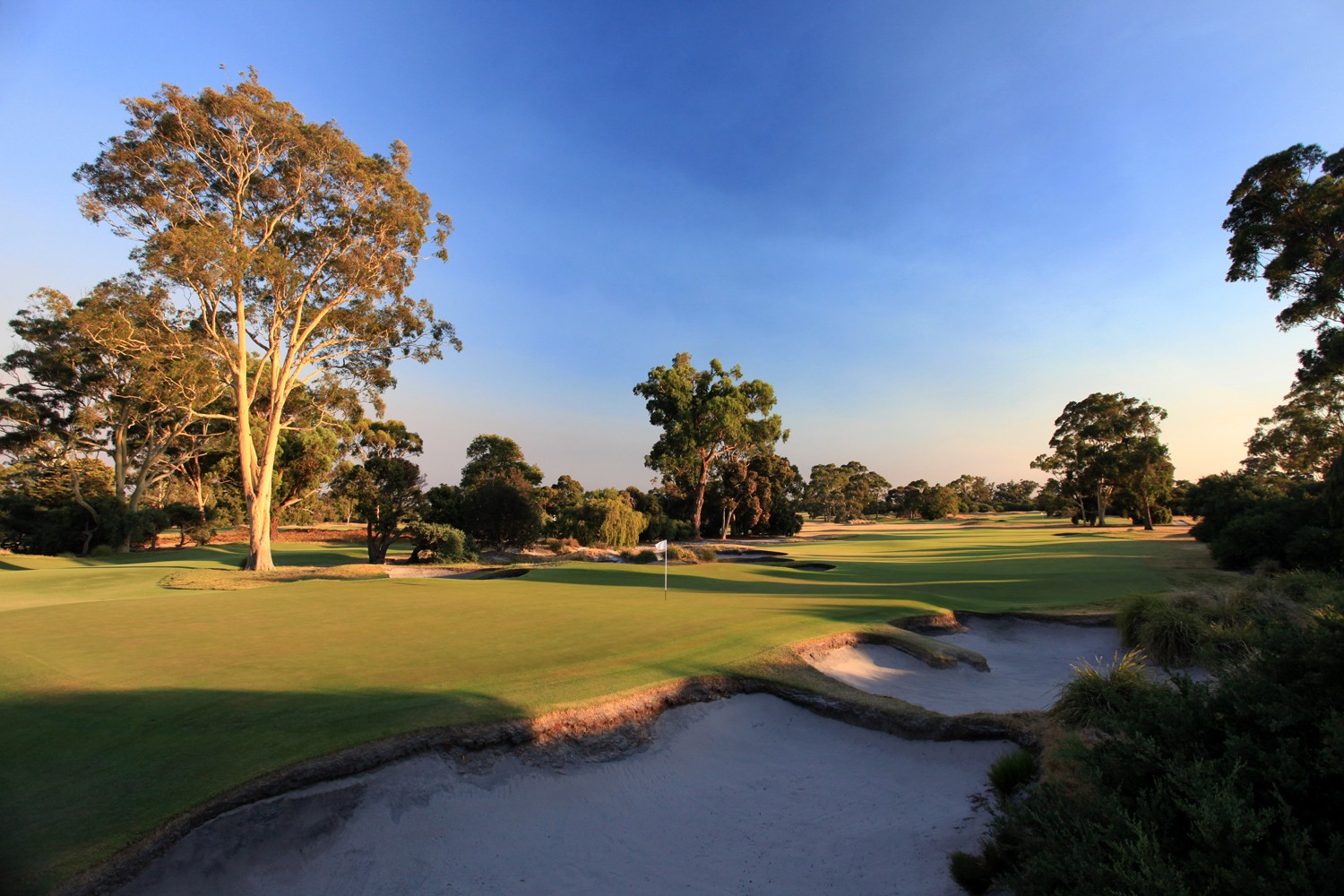
Kingston Heath Golf Club
Designer: Dan Soutar (1925), bunkering by Alister MacKenzie
The most common debate among Sandbelt visitors is whether Kingston Heath is better than Royal Melbourne’s West Course. There is no definitive answer, but the fact that the question is asked at all tells you everything about Kingston Heath’s standing.
The course was designed by Dan Soutar in 1925, but is often incorrectly credited to MacKenzie, who was brought in a year later solely to advise on bunkering. What he produced here, over 130 individual hazards shaped to blend into the surrounding heath grass, is considered some of his finest work anywhere.
The closing five holes, from the par-5 14th to the 18th, sit among the most demanding in Australian championship golf.
Signature hole: The par-3 15th. MacKenzie described the original version as ‘a blot on the course’ and redesigned it during his 1926 visit, placing the green atop a ridge and surrounding it with cavernous bunkers. Greg Norman hit what many called the winning shot of the 1995 Australian Open here: a low 5-iron to within 10 feet. Tiger Woods, on winning the 2009 Australian Masters at Kingston Heath, said the bunkering was ‘just phenomenal’.
Tournament history: Seven Australian Opens, the 2009 and 2012 Australian Masters, and the 2016 World Cup of Golf. Kingston Heath is scheduled to host the Presidents Cup in 2028.
Victoria Golf Club
Designer: Oscar Damman, William Meader, and Alister MacKenzie (1927)
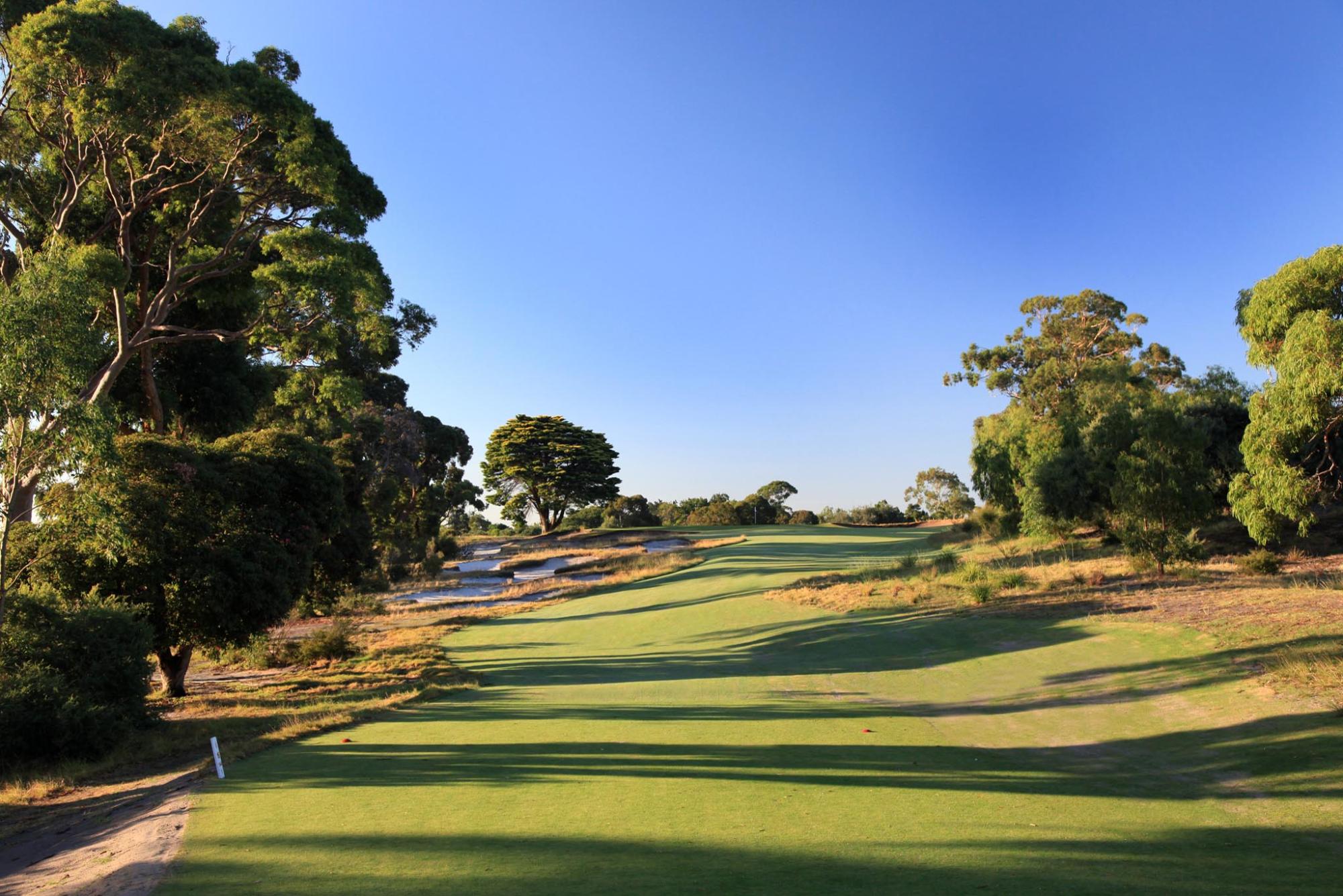
Located in Cheltenham, a short drive from both Royal Melbourne and Kingston Heath, Victoria is one of the Sandbelt’s quieter glories. It’s less written about than its neighbors, but consistently cited by those who have played it as one of the most satisfying rounds on the strip. Peter Thomson, five-time Open Champion and one of Australia’s greatest golfers, was a member here.
Recent restoration work has returned raised greens, deepened bunkers, and sharpened fairway lines closer to their original form. The detail at Victoria shows how Sandbelt courses can absorb a century of change without losing what made them great.
Signature hole: The par-4 3rd is a short but drivable hole with a shallow, angled green that demands a specific shot shape. Attempt to overpower it, and the bunkering punishes you; lay back, and you face a difficult angle. It’s a hole that rewards patience over ambition.
Tournament history: Five Australian Opens and three Women’s Australian Opens. Victoria also hosted the Australian Masters in 2010 and 2011, and the Australian PGA in 1999.
Metropolitan Golf Club
Designer: J.B. MacKenzie (1908), renovated by Tom Doak and Michael Clayton
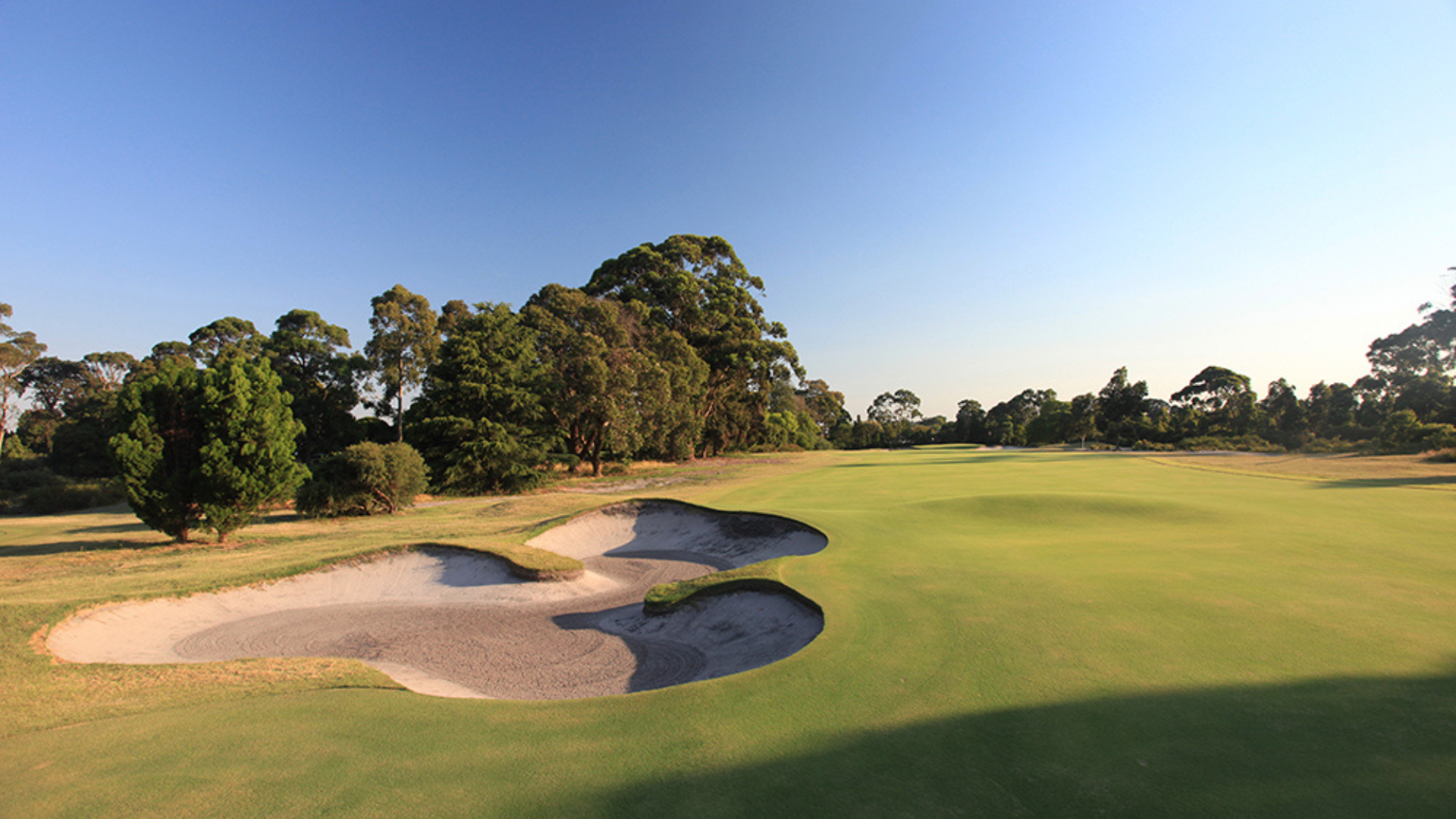
Among the most visually striking of the Sandbelt courses, Metropolitan pairs tree-lined fairways with deep bunkering and greens that are hand-mown to the bunker edges. There is almost no collar between the fairway and the sand. That is not an oversight; it’s a deliberate feature that demands clean, committed approaches.
Metropolitan, known locally as ‘Metro’, has hosted multiple championships, including the Australian Open. The 18th hole has its own footnote in golf: Greg Norman three-putted it to lose the 1979 Australian Open by one shot to Jack Newton, then returned in 1997 and three-putted again in a playoff, handing Lee Westwood the title.
Signature hole: The par-4 18th is a long and demanding closer that runs back toward the clubhouse with out-of-bounds tight on the right. The approach to a well-bunkered green makes it a fitting final examination after the precision required over the previous 17 holes.
Tournament history: Seven Australian Opens, five Australian PGA Championships, and the Australian Masters in 2014. Metro also hosted the World Cup of Golf in 2018.
Yarra Yarra
Designer: Alex Russell (1929), restored by Renaissance Golf Design (2016)
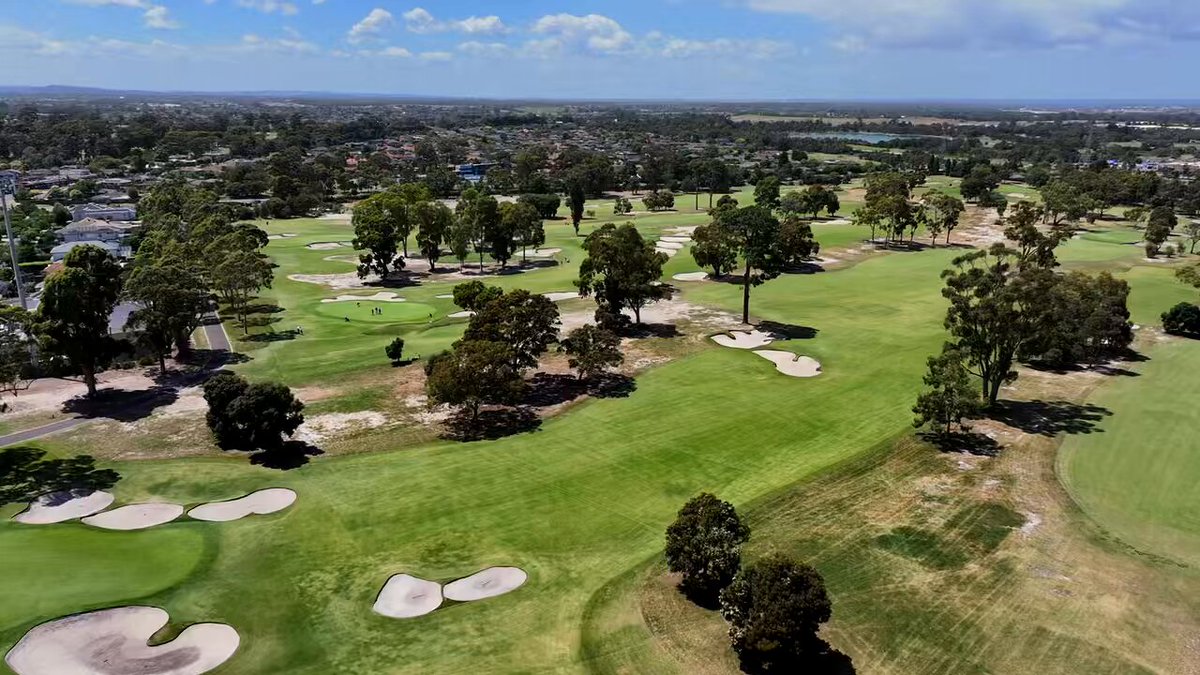
The least heralded of the five courses on our list, Yarra Yarra repays attention. Designed by Alex Russell – who partnered with MacKenzie on Royal Melbourne’s East Course – the layout sits on flatter terrain than its neighbors, which Russell offset with some of the most dramatically contoured greens on the entire Sandbelt. You don’t gain elevation here; you lose your footing on the putting surface instead.
A restoration project begun in 2016, led by Tom Doak’s Renaissance Golf Design team, stripped decades of incremental changes back to Russell’s original intent. The four par-3s are exceptional as a set. In Tom Doak’s Confidential Guide, they are rated seventh among all par-3 collections in the world, the only southern hemisphere course to appear in that category.
Signature hole: The par-3 11th. Described by Peter Thomson as a ‘national treasure’, the hole plays to a green formed by a bunker set on a diagonal, which demands a right-to-left shot shape. Go long and left, and you face one of the most difficult recovery shots on the Sandbelt, where the green slopes steeply away from you.
Tournament history: Yarra Yarra has hosted the Women’s Australian Open seven times and multiple editions of the Victoria Open.
Accessibility: Golf that’s close to the city
One of the Sandbelt’s greatest advantages is its proximity to Melbourne. All of the major courses are located within a roughly 30-45 minute drive of the city center, making it easy to base yourself in one place and play multiple top-tier courses without extended travel days.
Melbourne’s international airport provides excellent global connectivity – direct flights serve the US and most of Asia, while UK flights are mostly indirect. Once you land, the Sandbelt is less than an hour south of the terminal.
Most visitors base themselves in the bayside suburbs of Brighton or Sandringham, which are five minutes from the courses and close to the beach. Others choose the city center for easier access to Melbourne’s restaurants and culture.
Sample 5-day Sandbelt Itinerary
Day 1 – Arrive in Melbourne
Land in Melbourne and check into your hotel. Depending on your arrival time, the evening is a great time to head into the city. Melbourne’s CBD laneways are worth exploring before the golf begins. Dinner at a Fitzroy or Collingwood restaurant sets the tone for everything the city does well.
Day 2 – Royal Melbourne West and East
Play the West Course in the morning, when the greens are at their fastest. The East Course in the afternoon gives a different perspective on the same sandy soil. It’s shorter and less severe play, but the green complexes ask the same questions.
Day 3 – Kingston Heath
Give Kingston Heath the full day it deserves. Walk the 50-hectare course and take your time with the closing five holes, which are as demanding as anything in Australian championship golf. This is the round most visitors remember the longest.
Day 4 – Victoria and Metropolitan
Play Victoria in the morning, and Metropolitan in the afternoon. The contrast works well with Victoria’s natural elevation changes, followed by Metro’s flat, tree-framed precision. These two courses, while very different, share the same foundational philosophy.
Day 5 – Yarra Yarra and Melbourne
A morning round at Yarra Yarra plays quickly for experienced golfers, leaving the afternoon free for Melbourne. This is the day to visit the Yarra Valley wine region (about an hour east of the city), or take in a game at the MCG if the football season lines up.
Cultural add-ons
While there are many reasons to play golf in Australia, the cultural scene is just as compelling. Melbourne takes food, coffee, and wine more seriously than almost any other Australian city. A few specifics worth knowing before you go:
Coffee: Melbourne has its own coffee culture that predates the specialty coffee movement in most English-speaking countries. The flat white was either invented here or in New Zealand – Melburnians will tell you definitively which – but either way, the city’s cafe scene is exceptional. The suburb of Fitzroy is a good starting point, with St Ali in South Melbourne one of the most cited roasters in the country.
Restaurants: The best dining is concentrated in the CBD laneways – narrow streets lined with restaurants and wine bars that are easy to miss and hard to forget. Attica in Ripponlea, a short drive from the courses, consistently ranks among Australia’s best restaurants and is worth booking in advance.
Wine: The Yarra Valley is one of Australia’s finest cool-climate wine regions, with Pinot Noir and Chardonnay being the headlines. Several wineries open for lunch and tastings, making it an easy half-day while resting between rounds.
The MCG: If you’re in Melbourne between March and September, a game of Australian Rules Football at the Melbourne Cricket Ground is one of the great sporting experiences in the country. The atmosphere of 80,000 people at the ‘G is worth knowing about, even if watching sport isn’t the reason you came.
Best time to visit
November to March brings the best conditions for Sandbelt golf in Australia. The southern hemisphere summer produces firm, fast fairways and long daylight hours – the conditions the architects intended and the ones most visitors travel for.
Spring and autumn provide cooler temperatures and smaller windows of visitors, making them a good alternative if summer dates don’t work. July and August are Melbourne’s winter months: cooler, wetter, and slower on the greens. Most visitors plan around the November to March window.
Plan your Sandbelt golf trip with Premier Golf
The Sandbelt clubs are all private, and tee times are limited. The most reliable route to securing rounds at Royal Melbourne, Kingston Heath, Victoria, Metropolitan, and Yarra Yarra – in one seamless trip – is through a specialist with existing club relationships.
Our team handles all introductions, booking windows, accommodation, and transfers, so the only thing you need to think about is your game.
Start planning your Australia golf tour with our expert team.
FAQs
The Melbourne Sandbelt sits on ancient dunes that produce firm, fast-draining fairways and greens unlike anything on a typical parkland course. Architects like MacKenzie and Russell built courses that use the natural contours of the land to create strategic challenges, resulting in golf where creativity and shot-making matter more than distance.
All five major Sandbelt clubs are private members’ clubs. International visitors are regularly accommodated, but access typically requires proof of handicap, advance notice, and, in some cases, a letter of introduction. Weekday play is most common.
Working with a specialist tour operator like Premier Golf is the most reliable way to secure tee times across multiple clubs on a single trip. There are also several public golf courses in Australia available to complement your trip.
Having a car or private transfers makes moving between courses straightforward, and most Premier Golf itineraries include transfers. It’s possible to reach some courses by public transport from central Melbourne, but given the number of courses you’ll want to enjoy, private transport is the more practical option.
For serious golf travelers, yes. The Sandbelt brilliantly captures one style of golf. Tasmania’s Barnbougle Dunes and Cape Wickham Links offer a completely different coastal links experience, while Sydney’s New South Wales Golf Club adds clifftop drama overlooking the Pacific.
Domestic flights connect all three regions, and most visitors cover them in 10-14 days. See our guide to Australia’s 10 must-play golf courses for a complete picture.
Five days cover the five marquee courses, leaving one day for Melbourne. If you want to add Peninsula Kingswood or factor in a rest day, seven days works better. Extending to 10-14 days makes sense if you’re combining the Sandbelt with Tasmania’s Barnbougle courses or Sydney’s New South Wales Golf Club – a combination that makes for one of the most complete golf trips in the world.
Yes, and most Premier Golf Sandbelt itineraries include both. They sit less than 10 kilometers apart and are often combined into a two-day block. Both clubs require advance booking and a visitor introduction.
Share this: